

Paddington Arm, Grand Union Canal (Kensal Road Stretch)
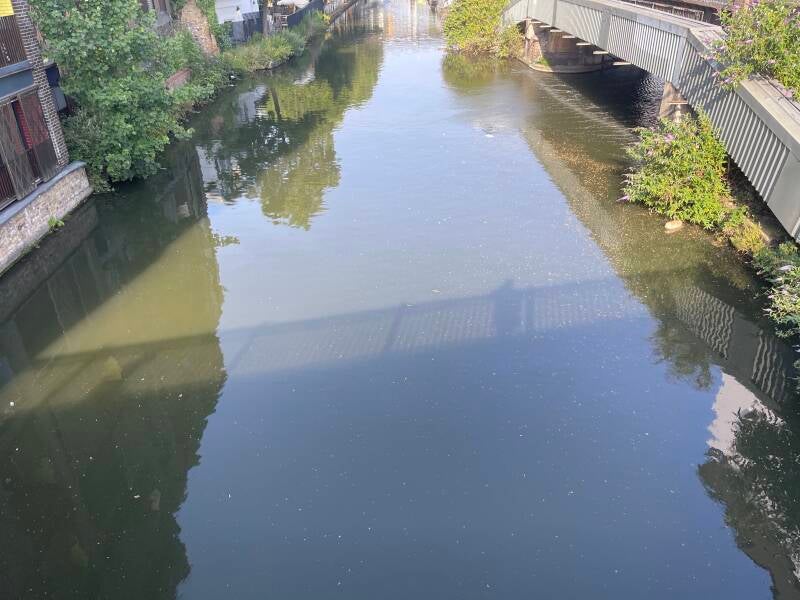
View from Ladbroke Grove Bridge looking East
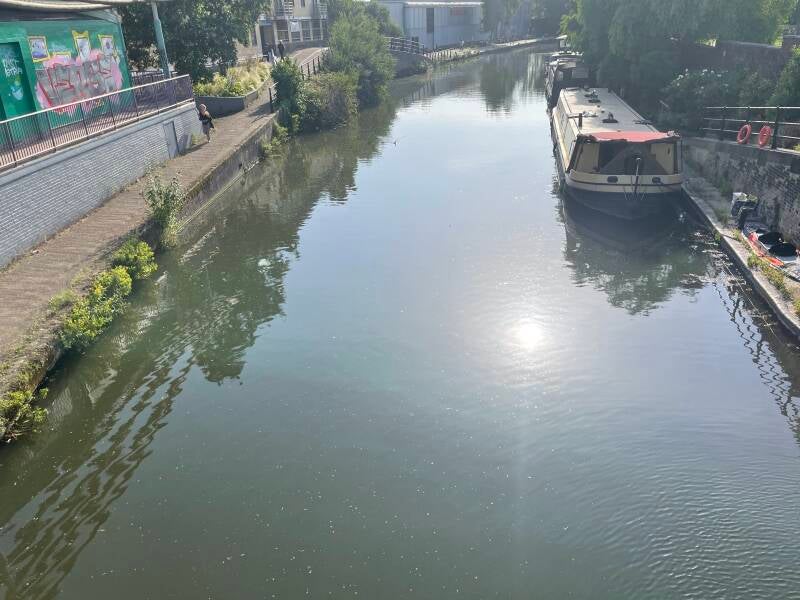
View from Ladbroke Grove Bridge looking West
The water appears calm and reflective with slightly greenish and somewhat murky, which may indicate algae growth, sediment, or limited water movement. Small particles or debris can be seen floating on the surface, suggesting some level of pollution.
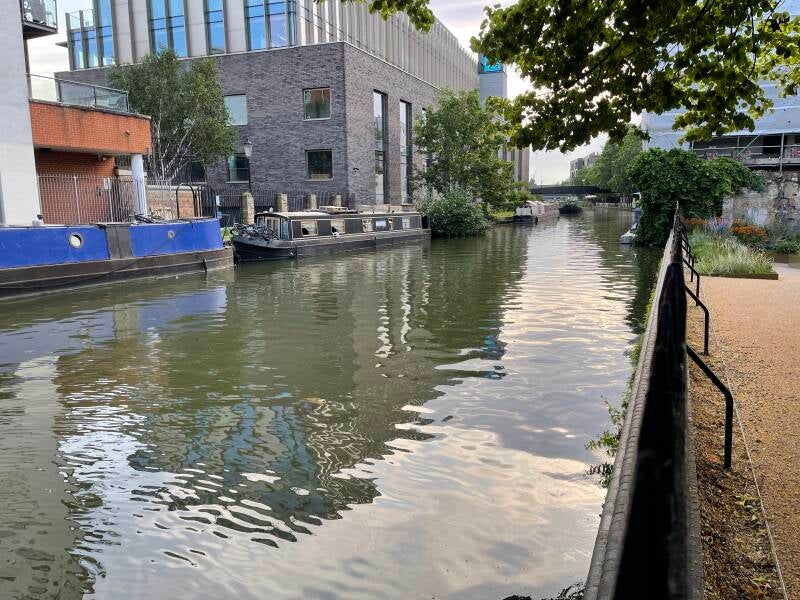
The waterway (blue space) is complemented by trees, shrubs, and other vegetation (green space) along the banks.
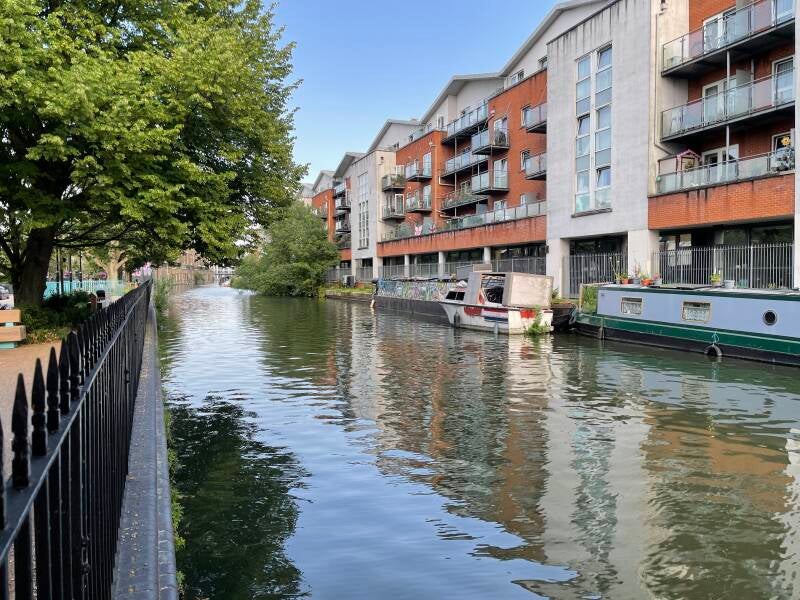
These natural features improve the appearance of the area, provide habitats for wildlife...
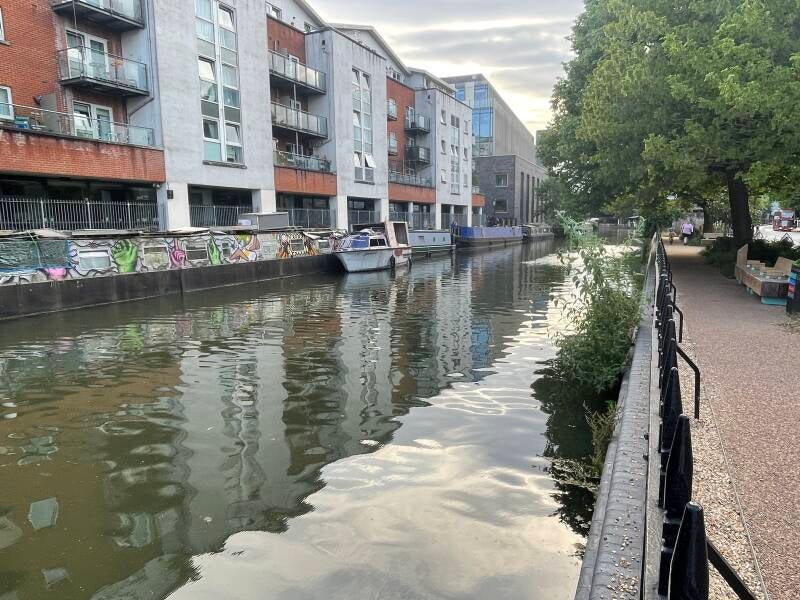
and contribute to the wellbeing of local residents by creating a more pleasant environment.
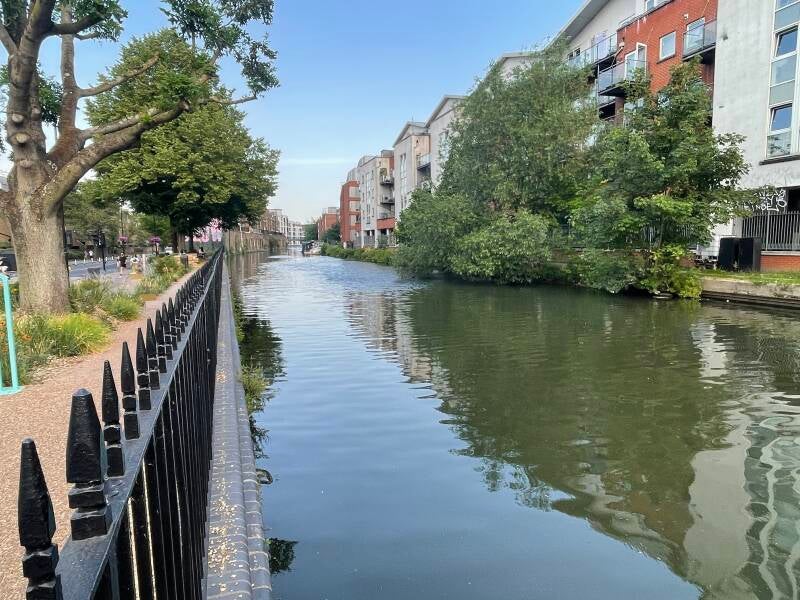
The vegetation - Trees and shrubs along the towpath and canal edge help to create a green-blue space within the urban environment. The trees provide shade and improve the visual quality of the area.

One of the most noticeable features is the canal itself. The relatively calm water reflects the surrounding buildings, trees, and sky, creating an attractive and peaceful scene despite being located within a busy urban area.

The view to the east showcases the Ha'Penny Steps bridge, where lush vegetation enhances the scenery. Several narrowboats are moored along the waterway, highlighting the canal's historical significance as a transport route while also illustrating its contemporary use for leisure and residential living.
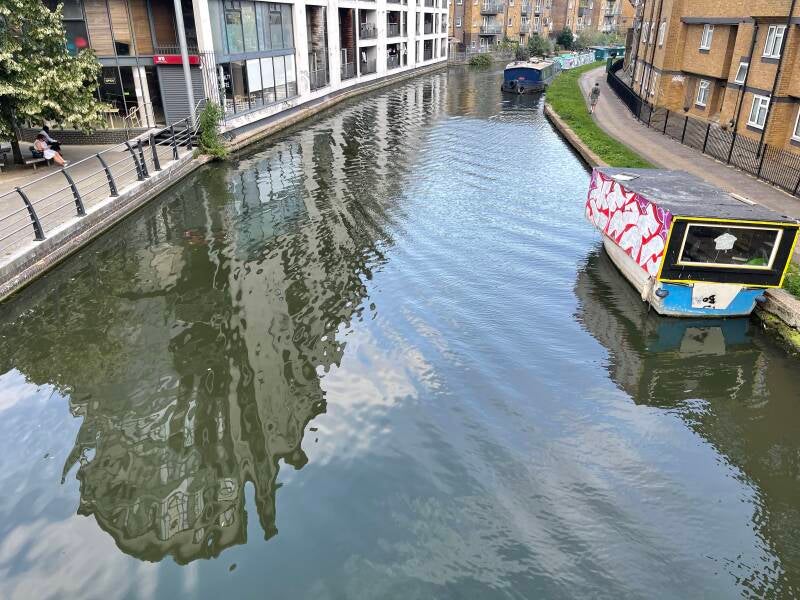
View from Ha'Penny Bridge looking East
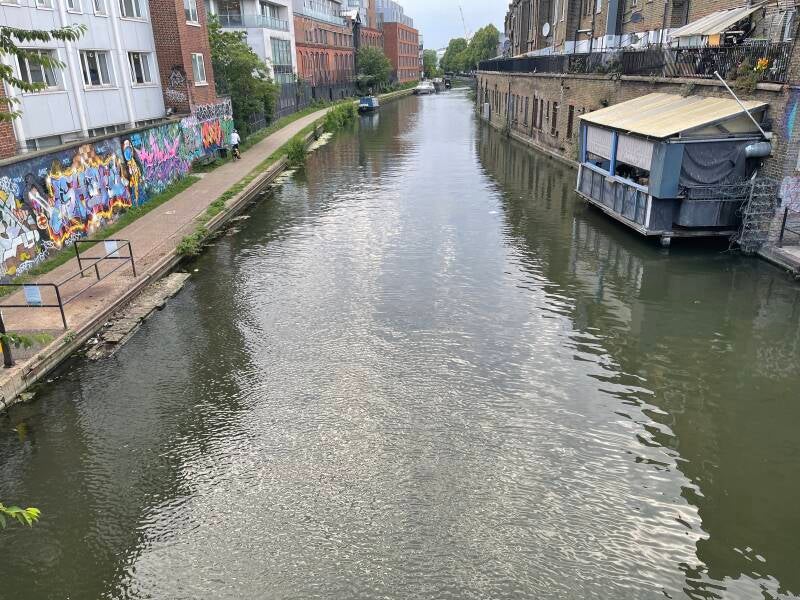
View from Ha'Penny Bridge looking West
The views from Ha'Penny Bridge illustrate how the Grand Union Canal combines historical, residential, and cultural functions. Colourful graffiti, moored narrowboats, and modern apartment developments create a distinctive urban landscape. Patches of green can be seen at the waters edge...
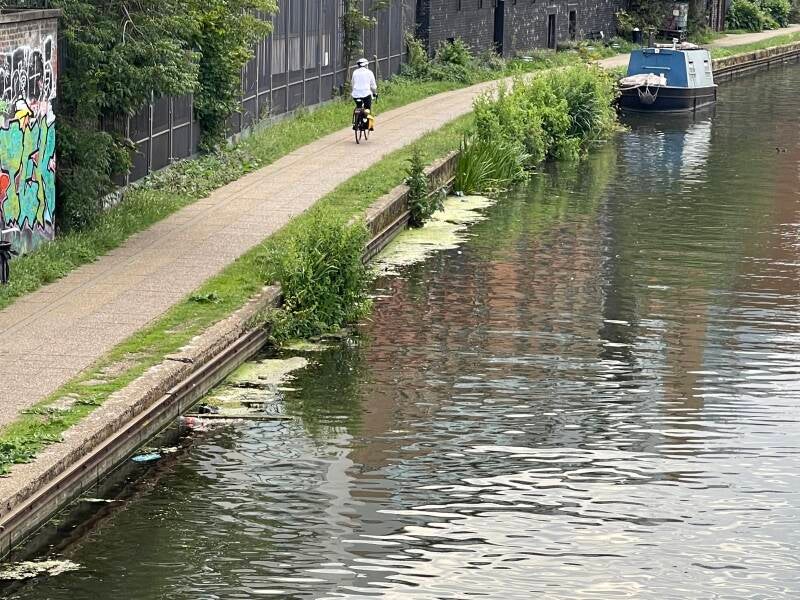
Small green patches dotted the edges of the canal, likely consisting of duckweed or algae thriving on the water's surface. Their presence suggests ideal conditions, including nutrient-rich and slow-moving water, while also providing habitat and food sources for a variety of aquatic organisms, including insects, snails, fish, and waterfowl such as ducks and moorhens.
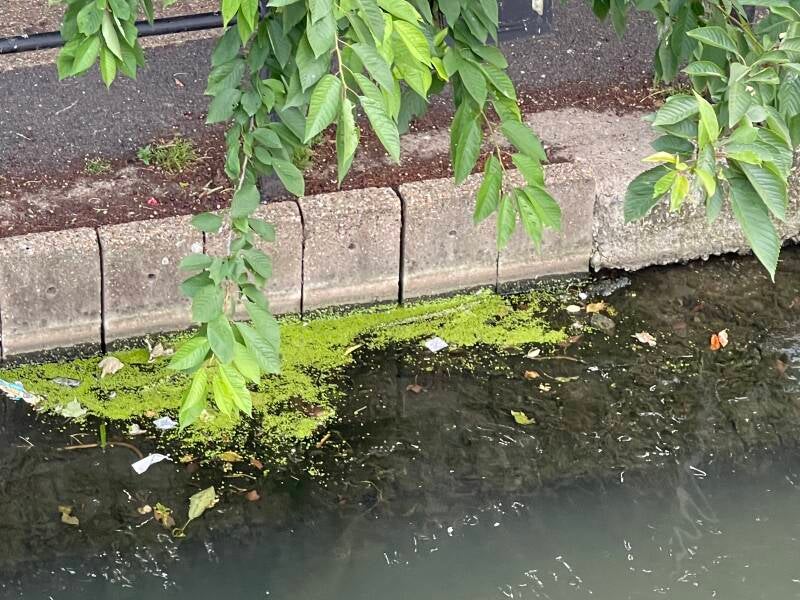
In addition to supporting aquatic life, these green patches play a crucial role in maintaining water quality. By absorbing excess nutrients, particularly nitrogen and phosphorus, they help mitigate the effects of runoff and pollution. However, if the green cover becomes extensive across the water surface, it could reduce light penetration and oxygen levels, potentially affecting aquatic life.