

Paddington Arm, Grand Union Canal (Kensal Road Stretch)
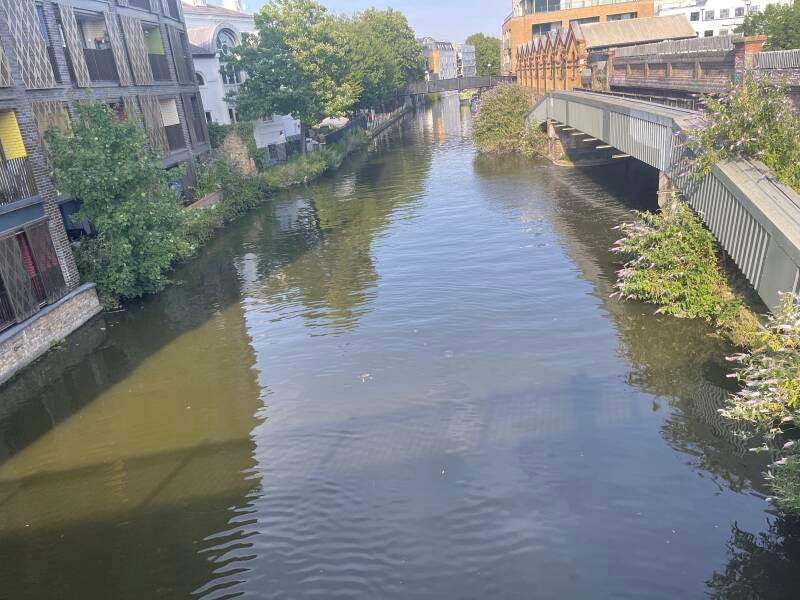
View from Ladbroke Grove Bridge looking East
Despite being close to major roads and urban development, this stretch of canal provides an important green corridor for both people and wildlife.

View from Ladbroke Grove Bridge looking West
The towpath is popular with walkers, runners and cyclists, offering a quieter alternative to nearby streets. The canal also supports birds, fish and aquatic plants, helping to increase biodiversity in the area.
The canal water appears relatively calm, with only small ripples caused by wind or passing boats. The surface reflects the surrounding buildings, trees and bright summer sky, creating mirror-like patterns that enhance the scenic quality of the waterway. In the western view, sunlight reflects strongly off the water's surface, producing shimmering highlights that give the canal a bright and tranquil appearance.
click photo to enlarge
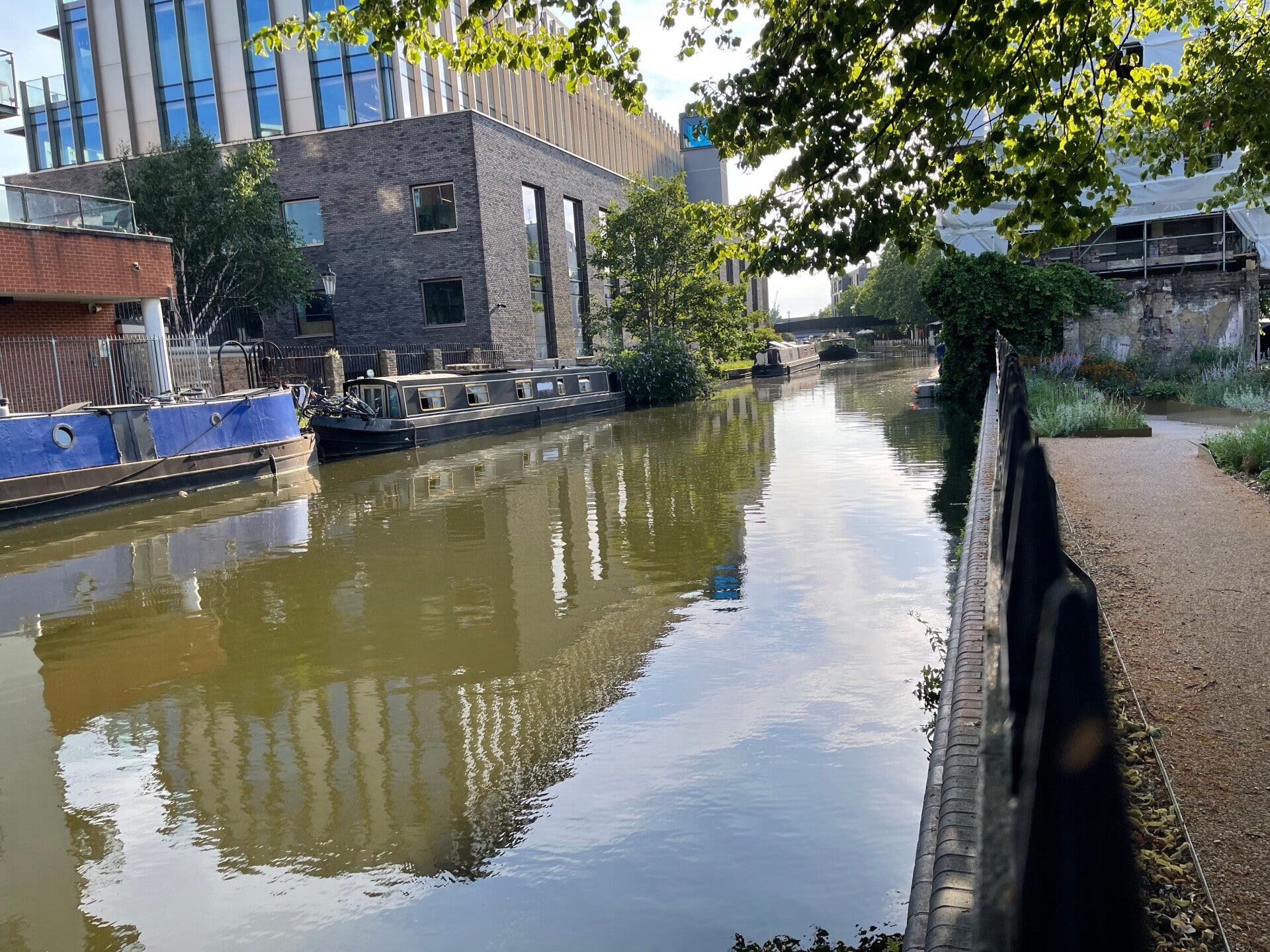
The serene view to the canal — reflections soften the hard edges of the city.
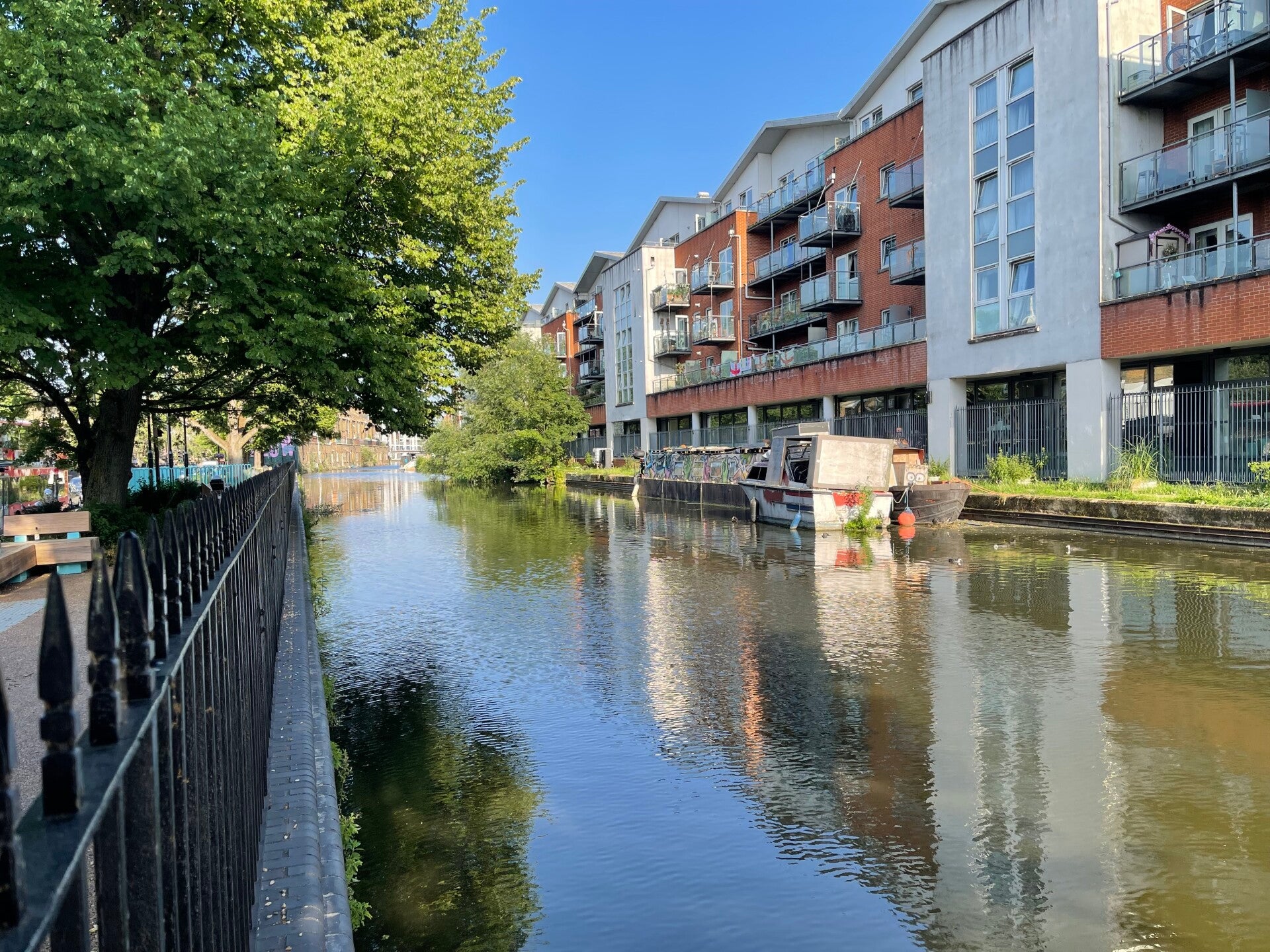
Old and new side by side: narrowboats rest beneath modern apartment blocks.
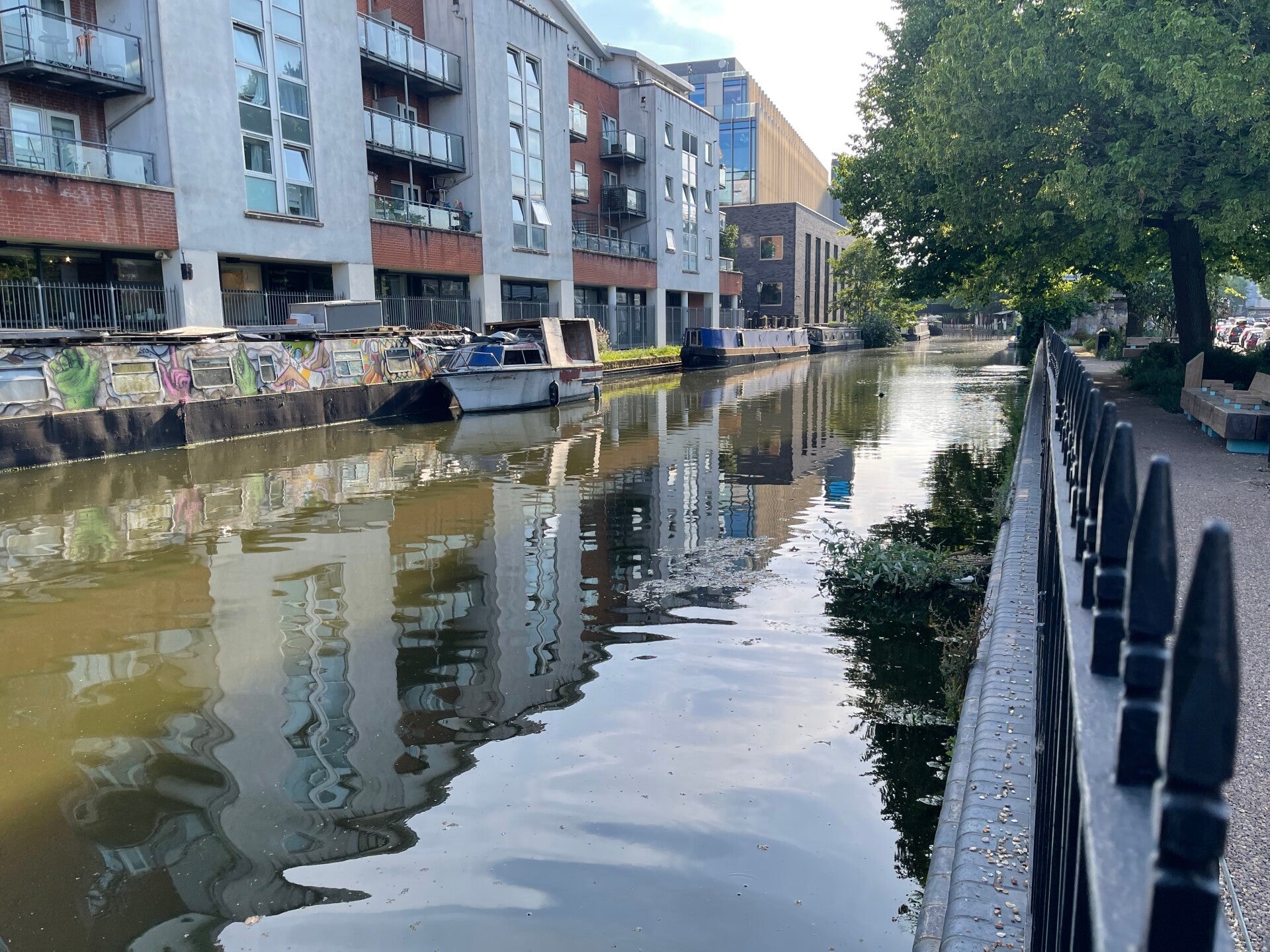
A mirror to the city — the water turns buildings and sky into one gentle view.
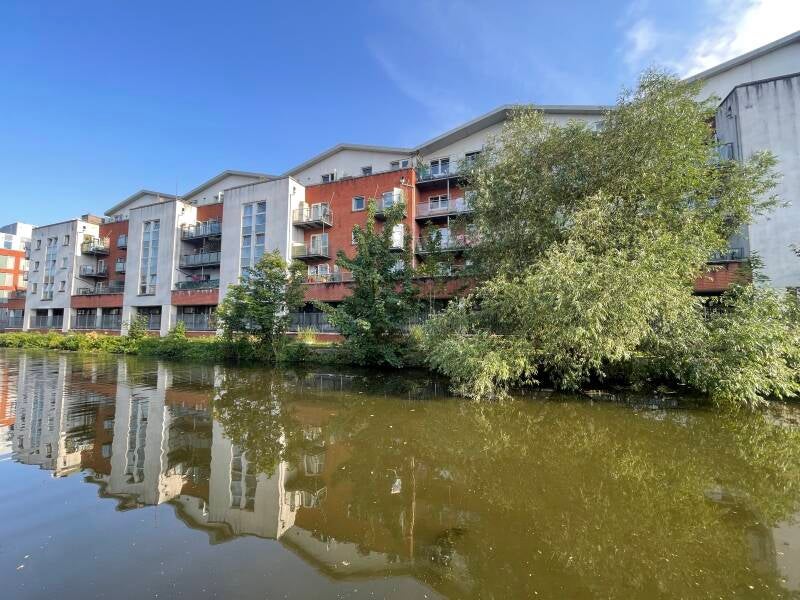
One of the most striking features throughout the photographs is the calm water surface. The canal acts like a mirror, reflecting apartment buildings, trees, blue skies. These reflections create attractive visual patterns that change depending on the angle of the sunlight and the movement of the water.
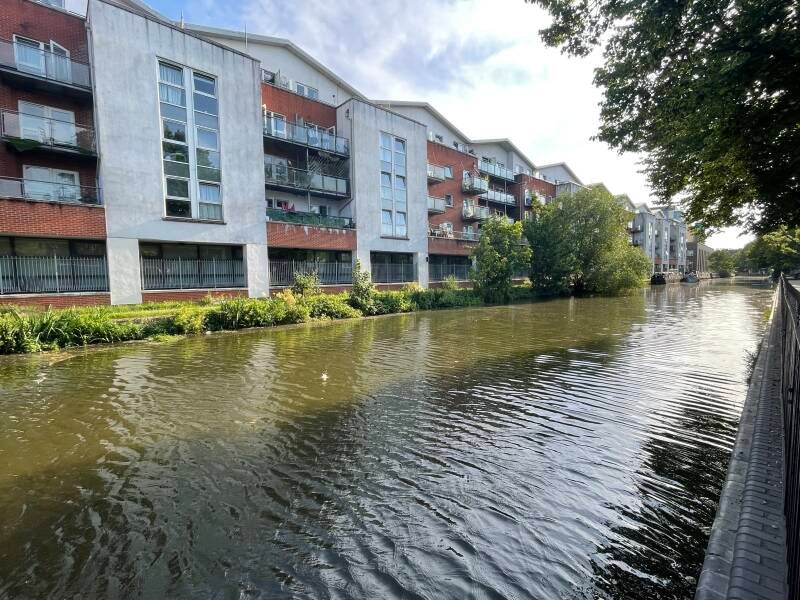
Although gentle ripples are visible in some photographs, likely caused by wind or boat movement, the water remains largely undisturbed.

The canal water appears greenish-brown, which is typical of many slow-moving canals. This colour is often caused by suspended sediment, algae, aquatic vegetation and the reflection of surrounding trees rather than indicating pollution. There are no obvious signs of floating litter, oil slicks or excessive surface pollution
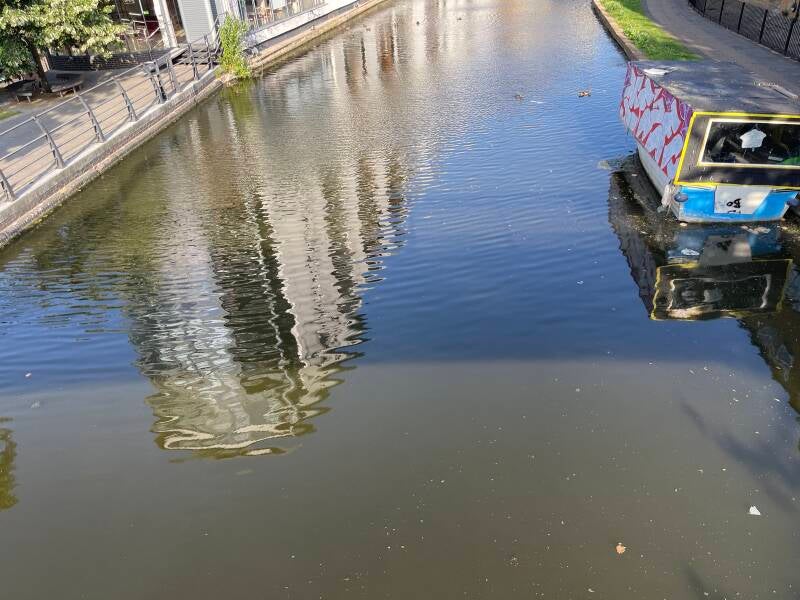
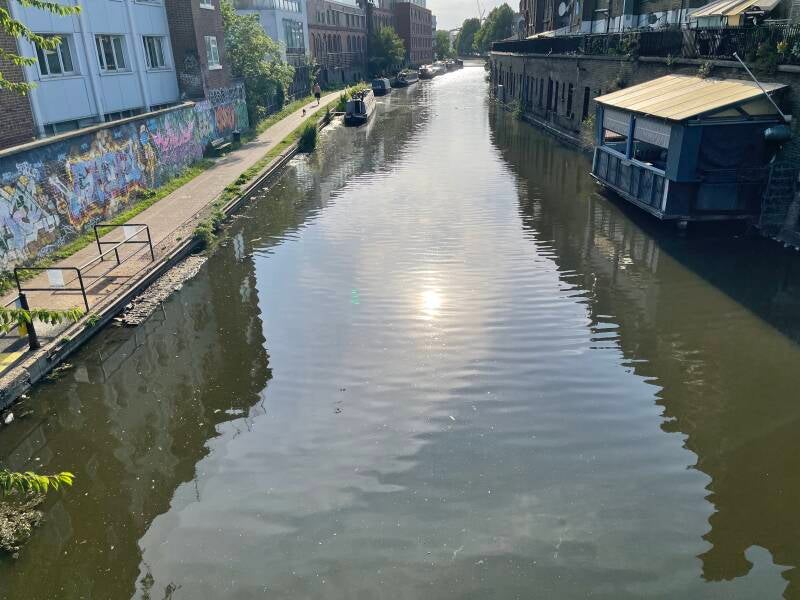
Grand Union Canal where the water appears darker and murkier than in other locations. The greenish-brown colour reduces the clarity of the water, making it difficult to see below the surface. While this colour can be caused by algae, suspended sediment and organic matter, it may also indicate a build-up of nutrients in the slow-moving canal.
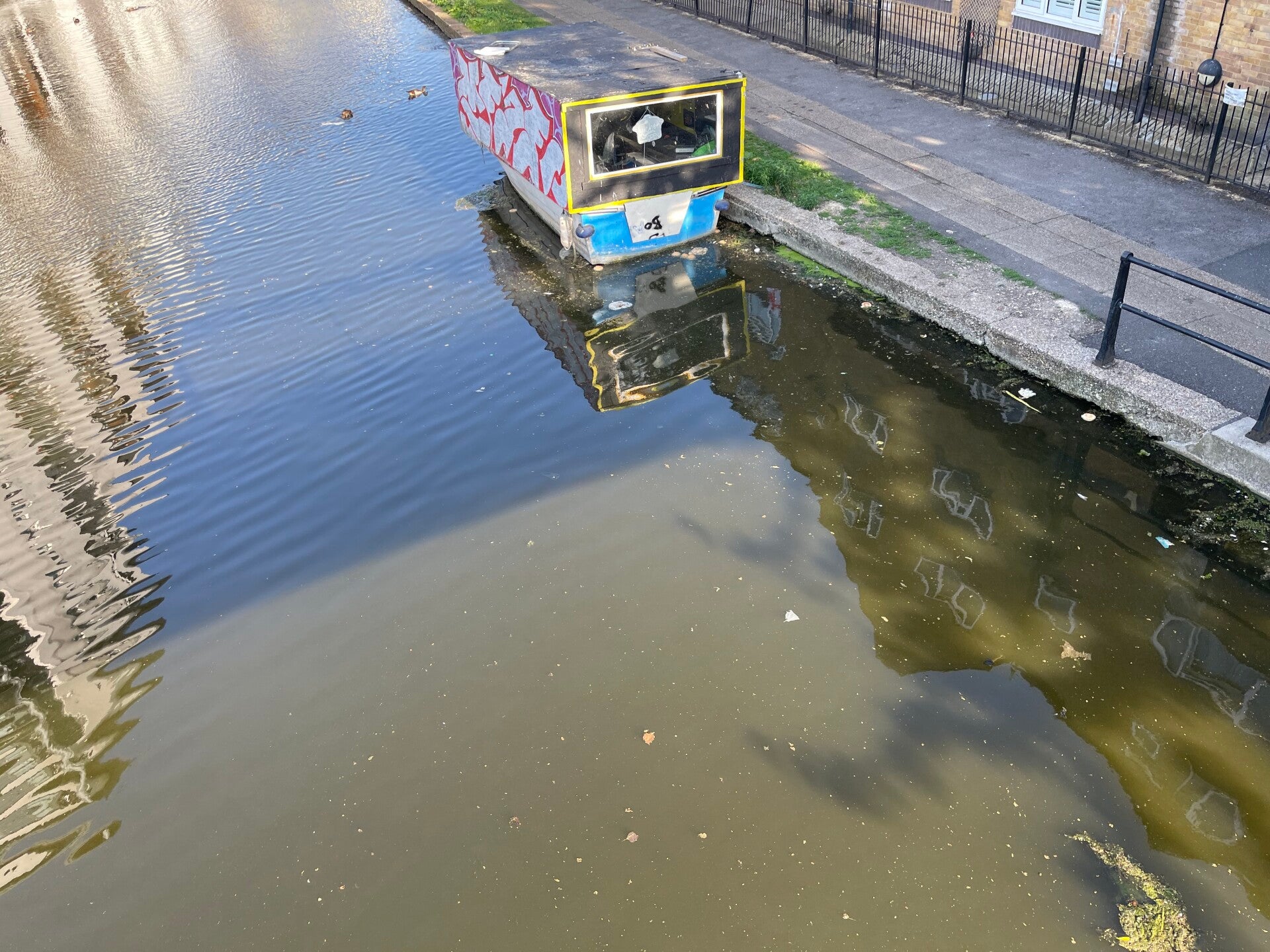
Several small pieces of floating debris are visible on the water surface(see above), particularly near the canal edges and alongside the moored boat. In addition, patches of green algae or floating aquatic vegetation can be seen accumulating along the banks.
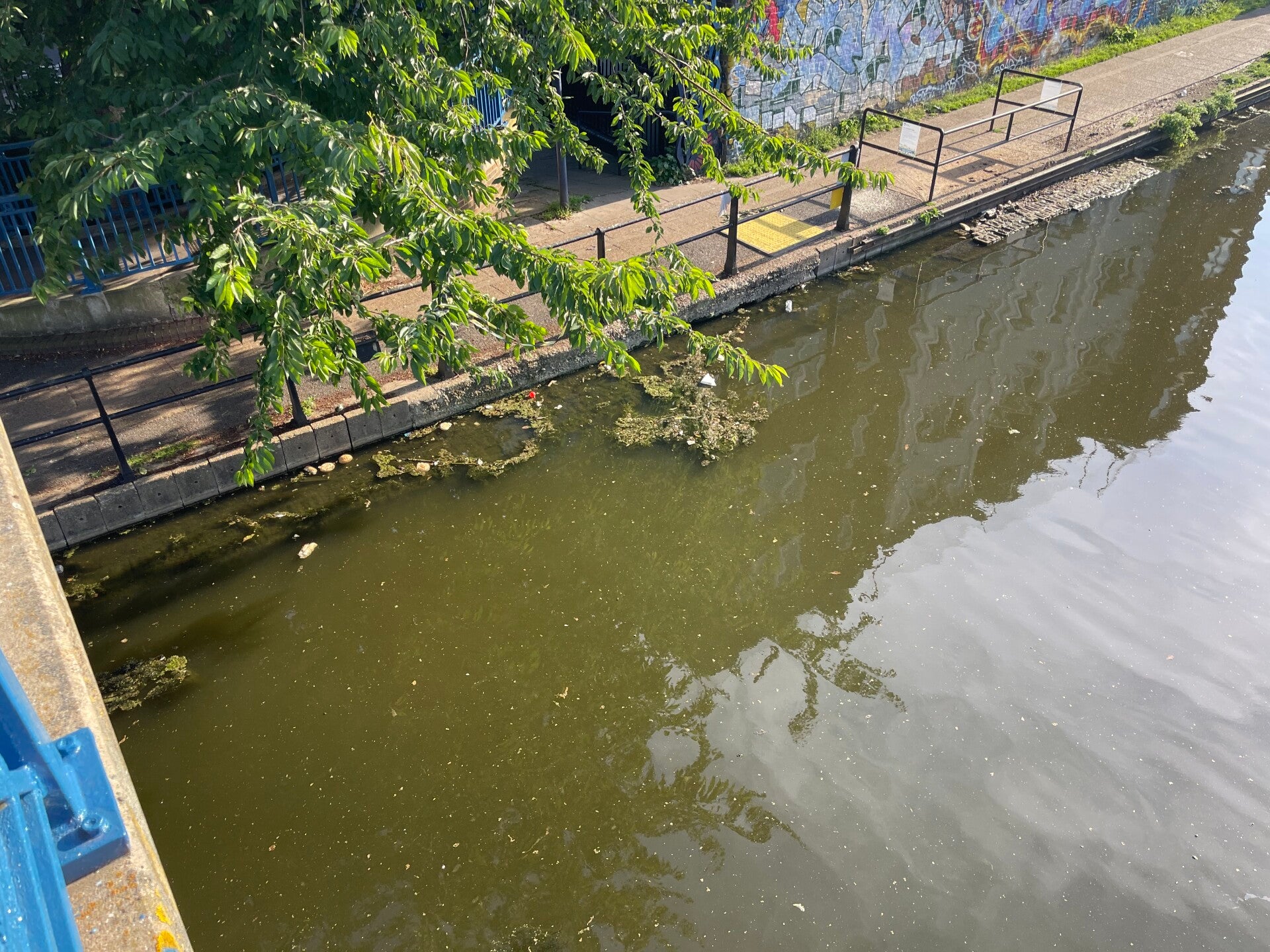
Despite the darker appearance of the water, the canal still produces clear reflections of surrounding buildings, boats and the sky. The reflections are slightly distorted by gentle ripples created by wind or passing boats