

Paddington Arm, Grand Union Canal (Kensal Road Stretch)
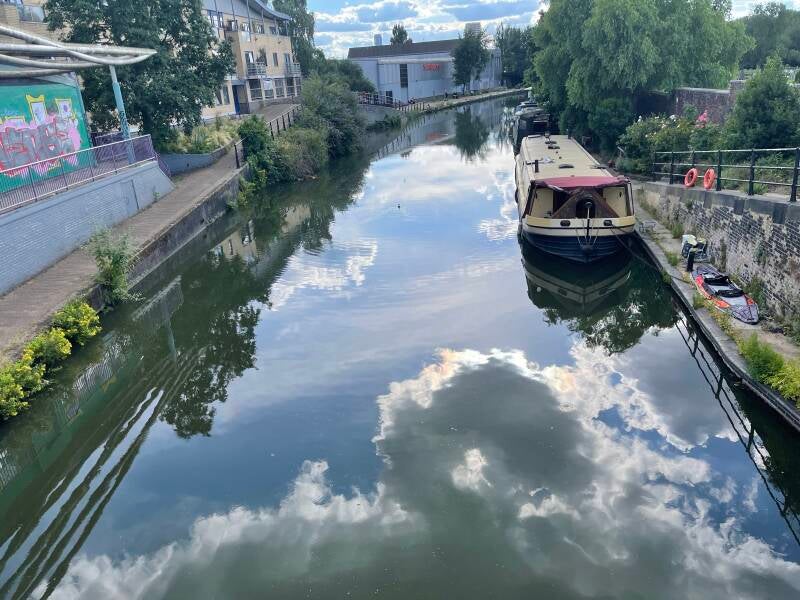
View from Ladbroke Grove Bridge looking West
Vegetation: Trees and shrubs soften the built environment and provide valuable habitats for birds and insects. Accessibility: Although the canal is visually attractive, there is limited evidence of public activity, making this stretch feel quieter and more residential than recreational.
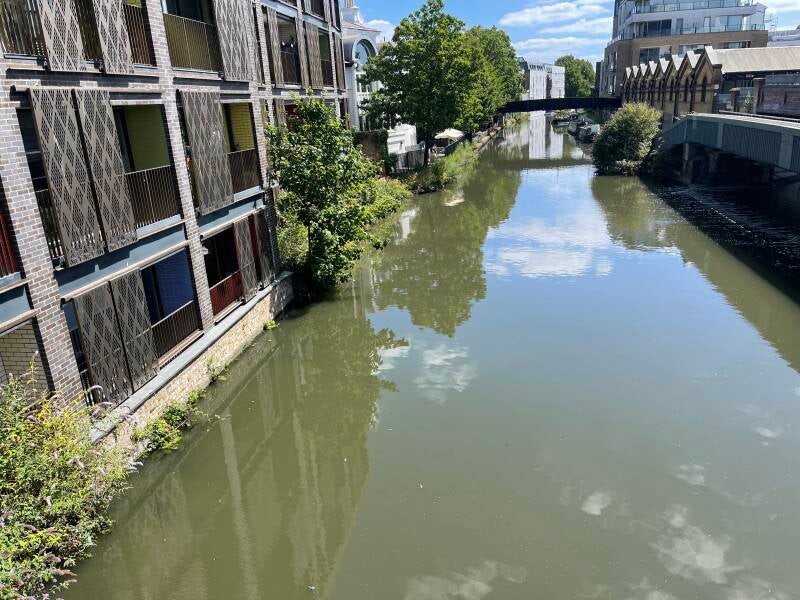
View from Ladbroke Grove Bridge looking East
Water quality: The water appears greenish-brown with limited visibility beneath the surface. While no floating litter is immediately visible, the colour suggests algae growth or suspended sediment, which is common in slow-moving canals during warmer months.
The Mature Trees provide shade and improve biodiversity. No obvious accumulation of floating rubbish in this photograph either. Street art: Graffiti is visible on the wall beside the towpath. While some may see this as vandalism, it also reflects the area's urban character and the close relationship between canals and street art culture in West London.
click image to enlarge
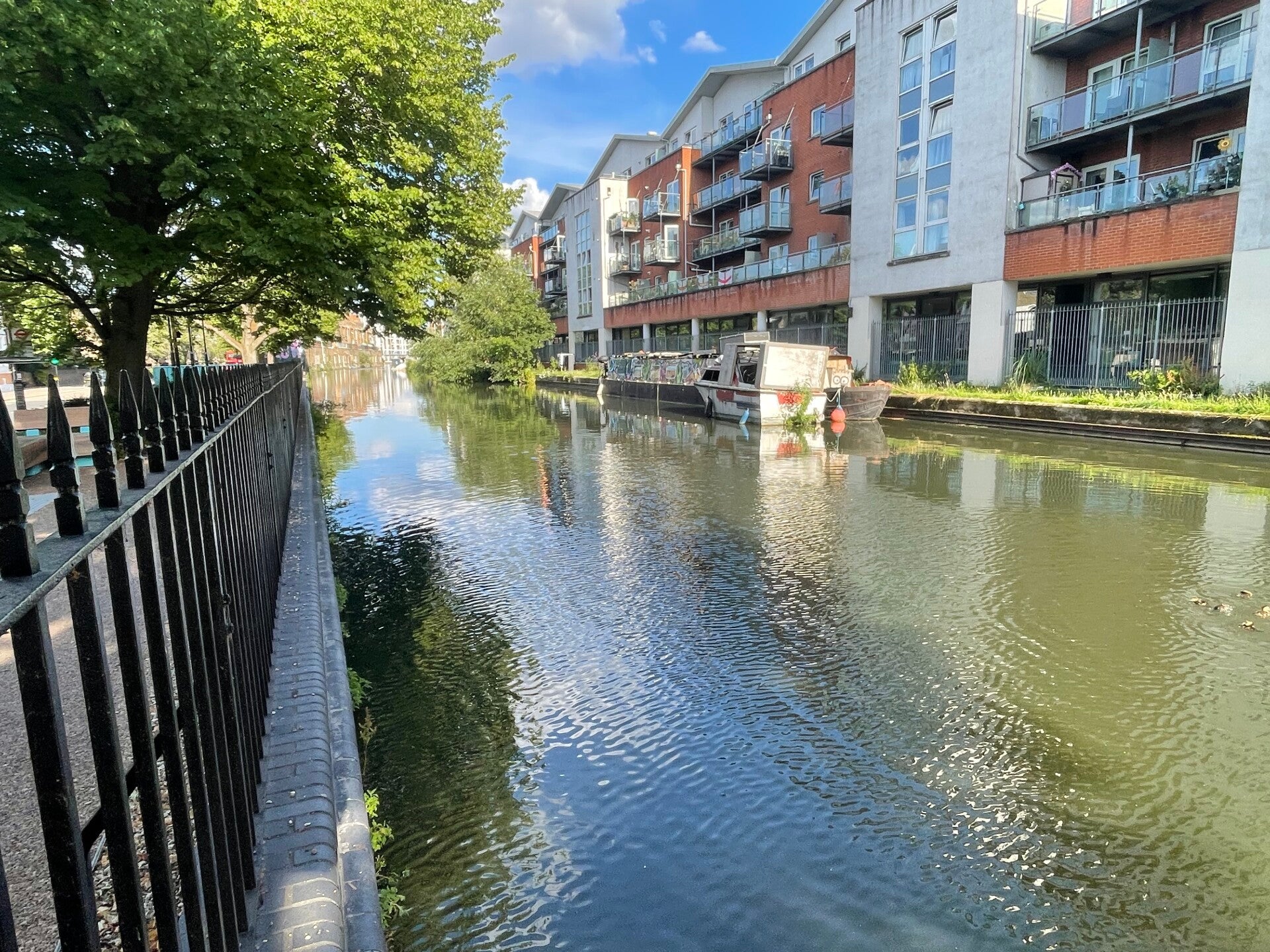
The images looks along the canal with apartment buildings lining the right bank and a mature tree dominating the left side. Vegetation: The mature tree provides shade, improves air quality, and contributes to biodiversity by creating habitats for birds and insects.
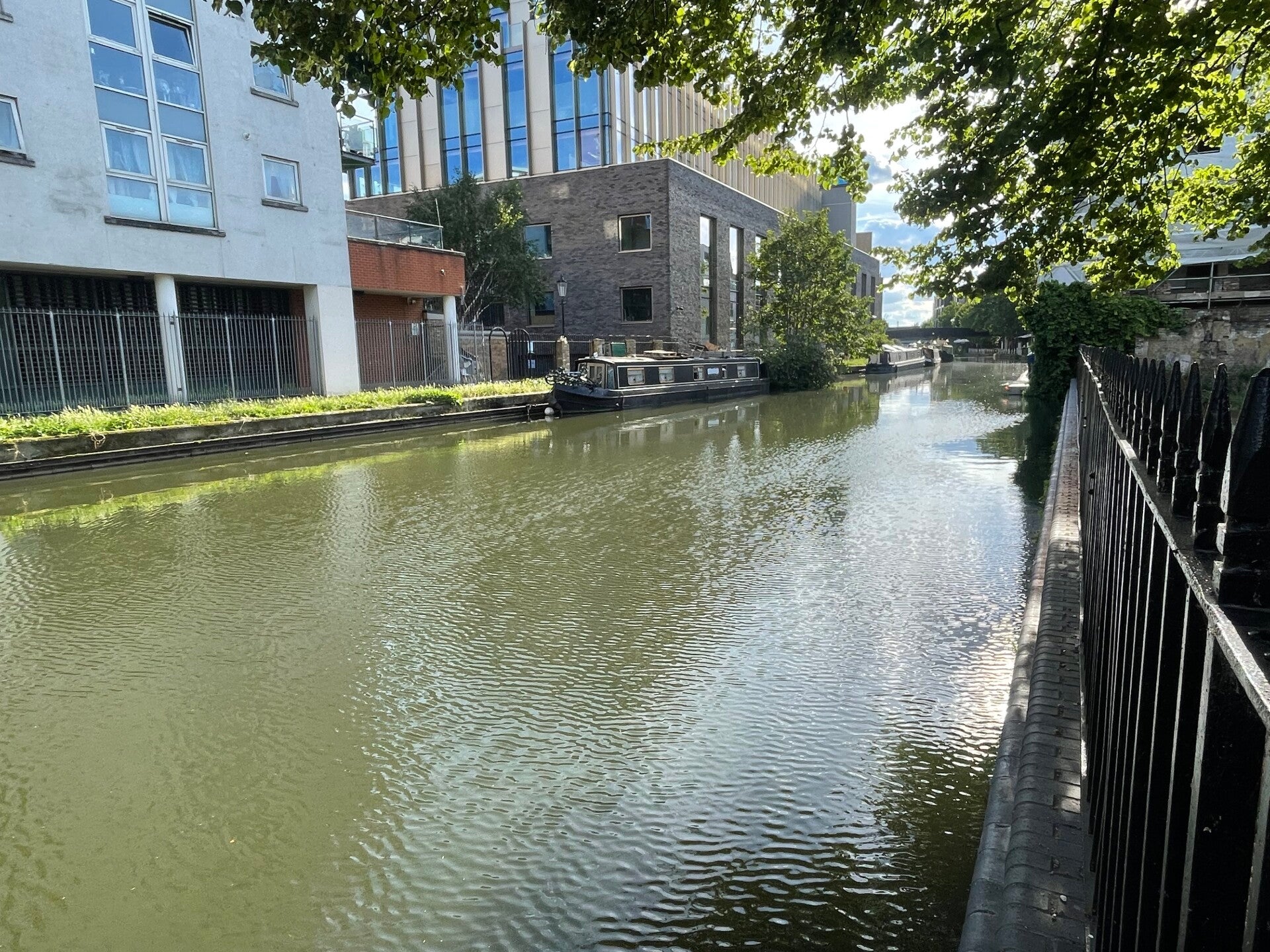
Residential integration: Apartment buildings are set back behind vegetation, creating a more balanced relationship between built and natural environments. Absence of litter: The water surface appears free from significant waste, contributing to the canal's aesthetic appeal.
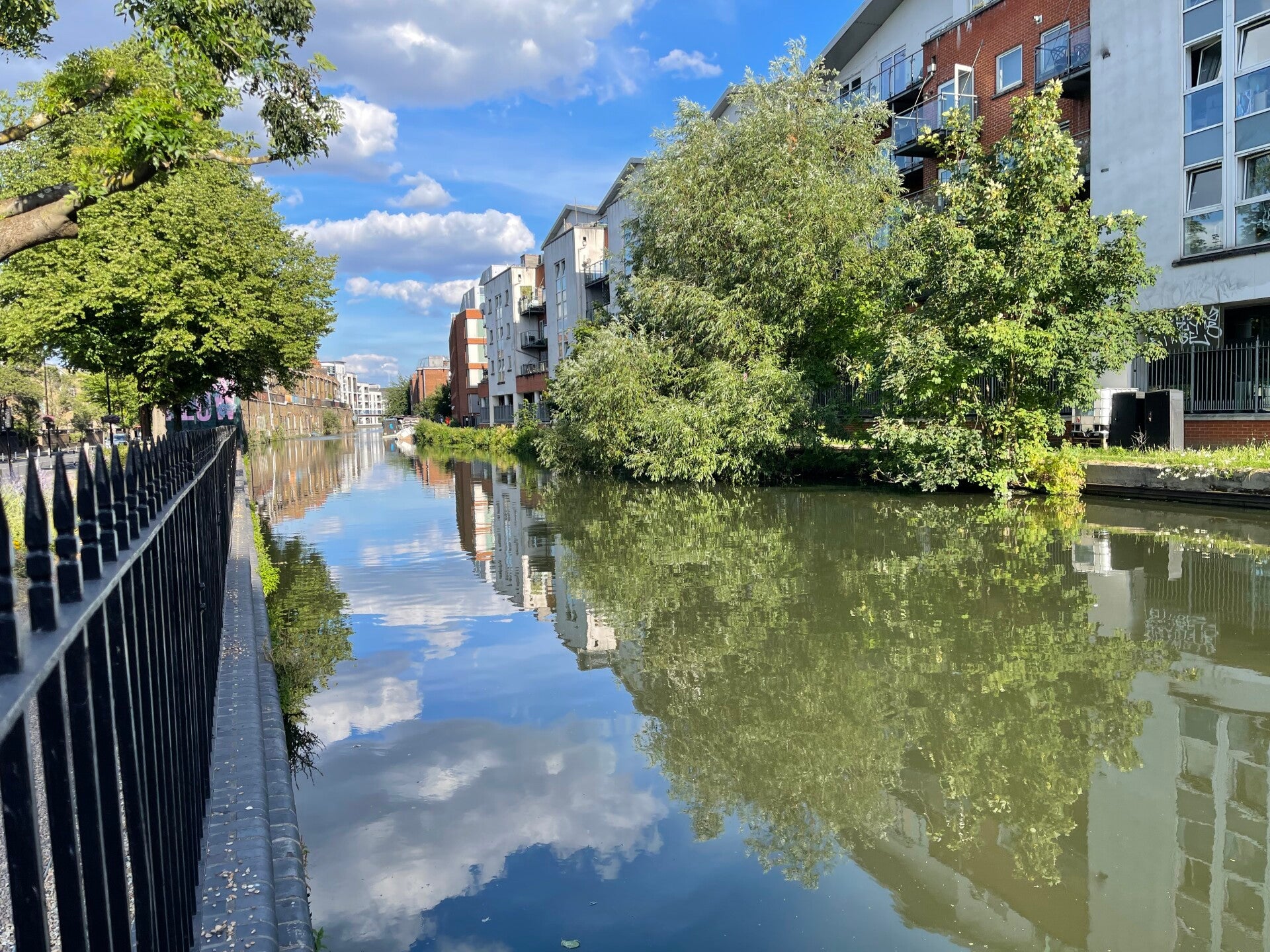
Tree cover: Dense vegetation on the right bank softens the urban environment and provides valuable wildlife habitat. Water reflections: The calm water creates clear reflections of trees, buildings, and clouds, enhancing the scenic quality of the canal.
All three photographs above show that the canal has become a focal point for residential development. The waterside setting adds aesthetic and economic value while encouraging people to engage with the canal.
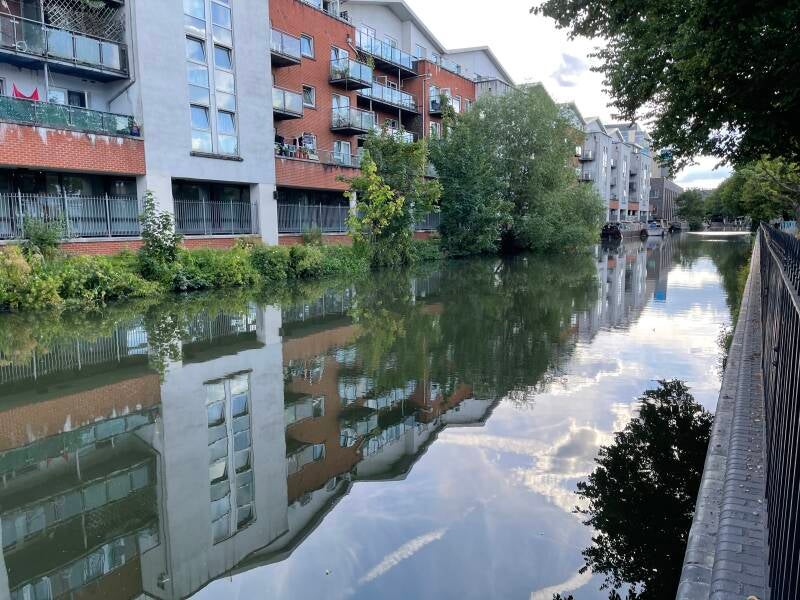

Both photograph captures a tranquil section of the canal bordered by modern apartment buildings on the left and a towpath on the right. The calm water creates near-perfect reflections of the surrounding buildings, trees, and sky. Although the canal is surrounded by dense housing, the presence of mature vegetation helps maintain a balance between the built and natural environments

Landscaped public space: The planted flower beds and shrubs beside the towpath create an attractive green corridor. Native and ornamental plants provide habitats for pollinating insects while improving the visual quality of the canal. Street art: The large mural on the left introduces a strong cultural element. Water reflections: The exceptionally calm water produces clear reflections of buildings and clouds, creating a peaceful atmosphere and enhancing the canal's scenic value.
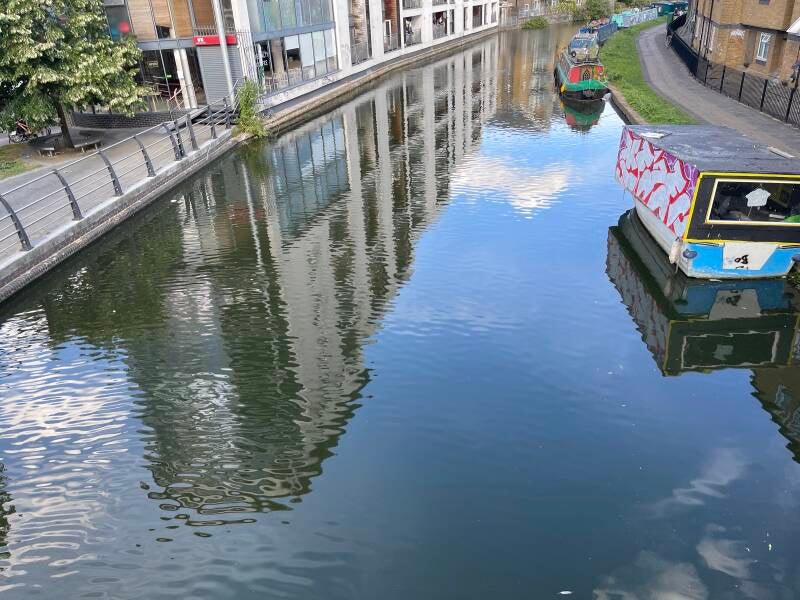
View from Ha'Penny Bridge looking East
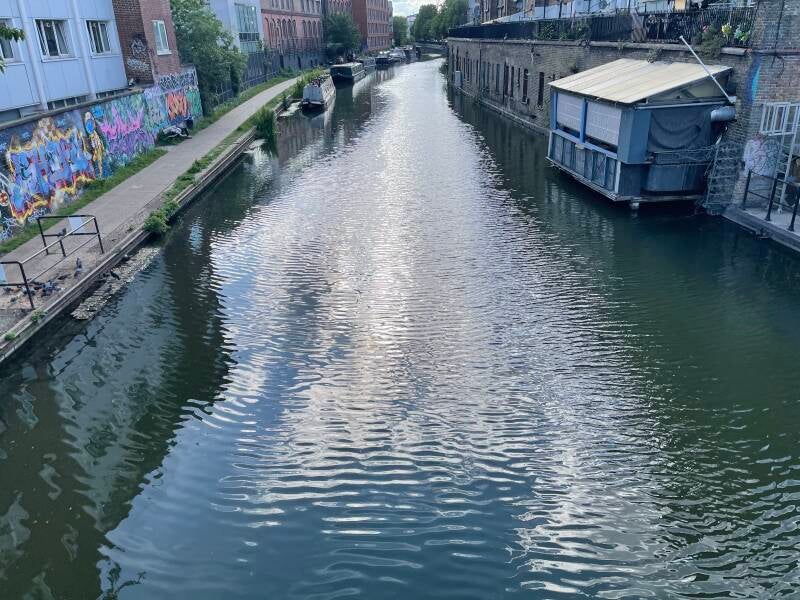
View from Ha'Penny Bridge looking West
Floating structure: The waterside building highlights the diverse uses of canal space beyond transportation, demonstrating how the canal continues to support different activities. Towpath: The canal remains accessible through a continuous pedestrian route, reinforcing its role as a public space. Water movement: Unlike the previous images, small ripples are visible on the water surface, slightly reducing the strength of reflections but indicating gentle movement.