

Paddington Arm, Grand Union Canal (Kensal Road Stretch)
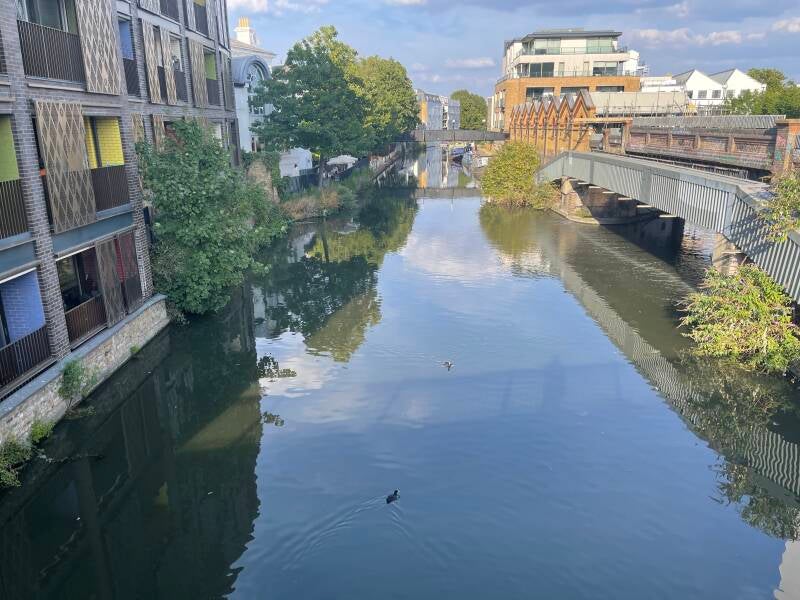
View from Ladbroke Grove Bridge looking East
Looking east, the canal presents a calm appearance with good reflections and no visible surface litter. Water clarity alone does not reveal the full picture. Pollution can exist in forms that are invisible to the eye, including dissolved chemicals, excess nutrients, bacteria and microscopic plastics.
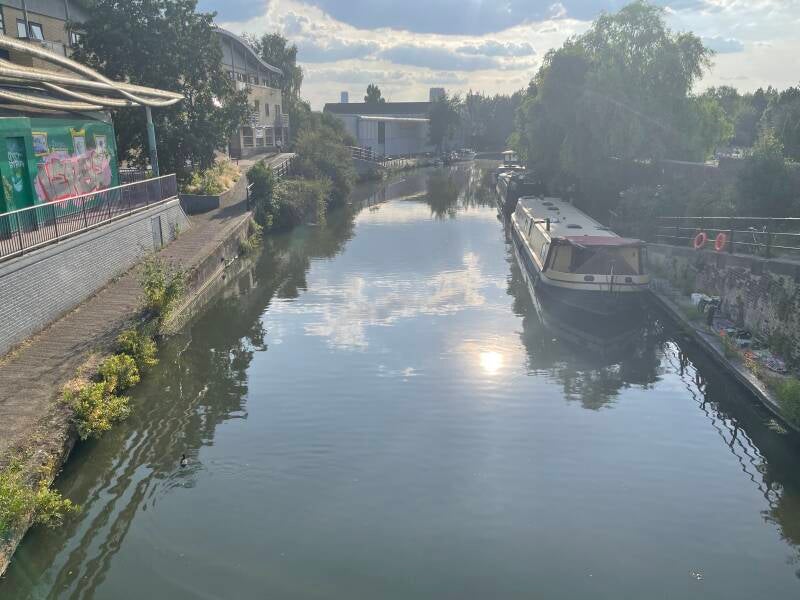
View from Ladbroke Grove Bridge looking West
Looking west, the waterway remains equally tranquil, bordered by residential developments, mature trees and permanently moored boats that make this stretch an important green corridor through the city.
click image to enlarge image
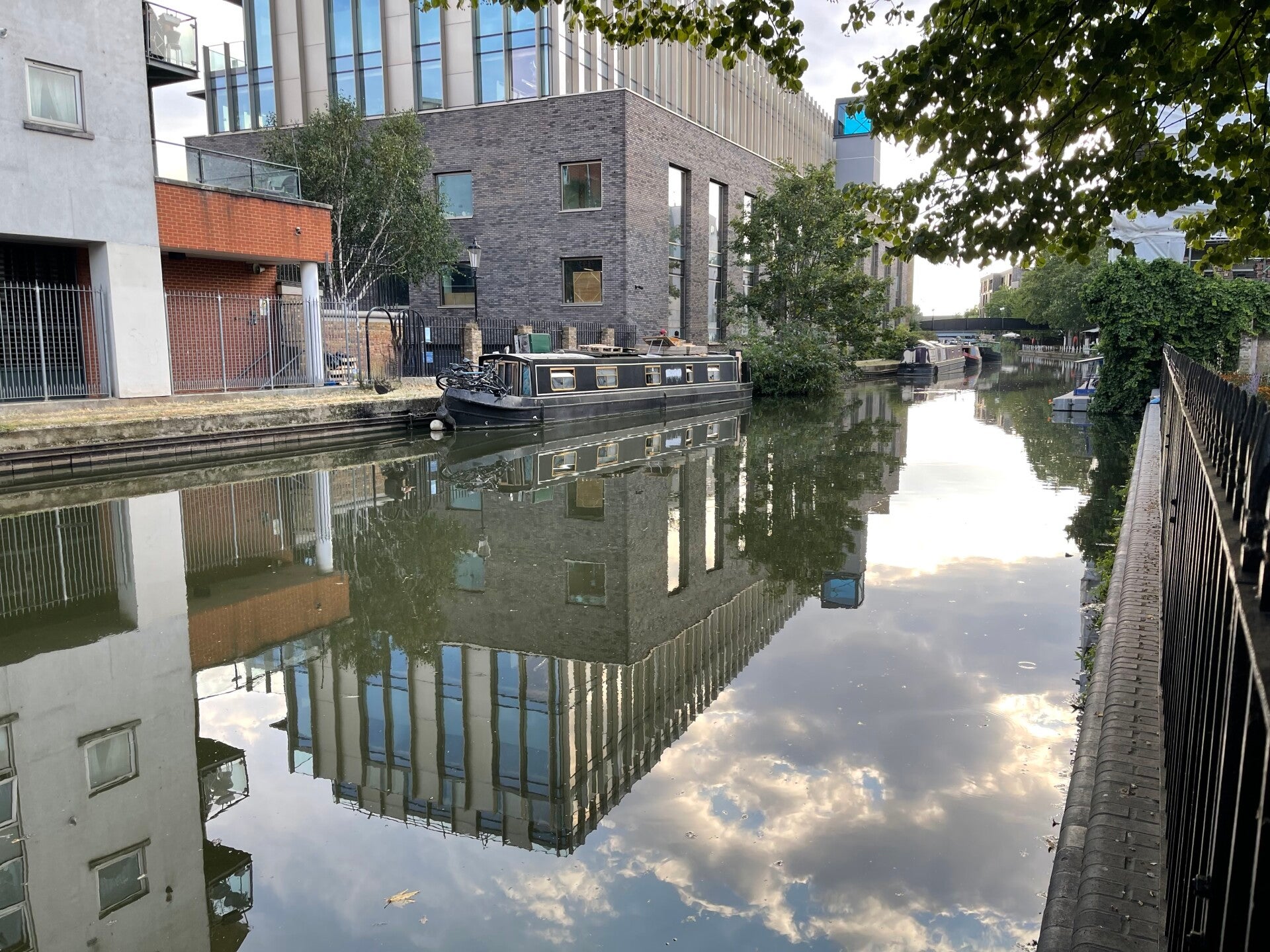
The calm water creates striking reflections of the buildings and evening sky, demonstrating how tranquil the canal can appear during periods of settled weather.
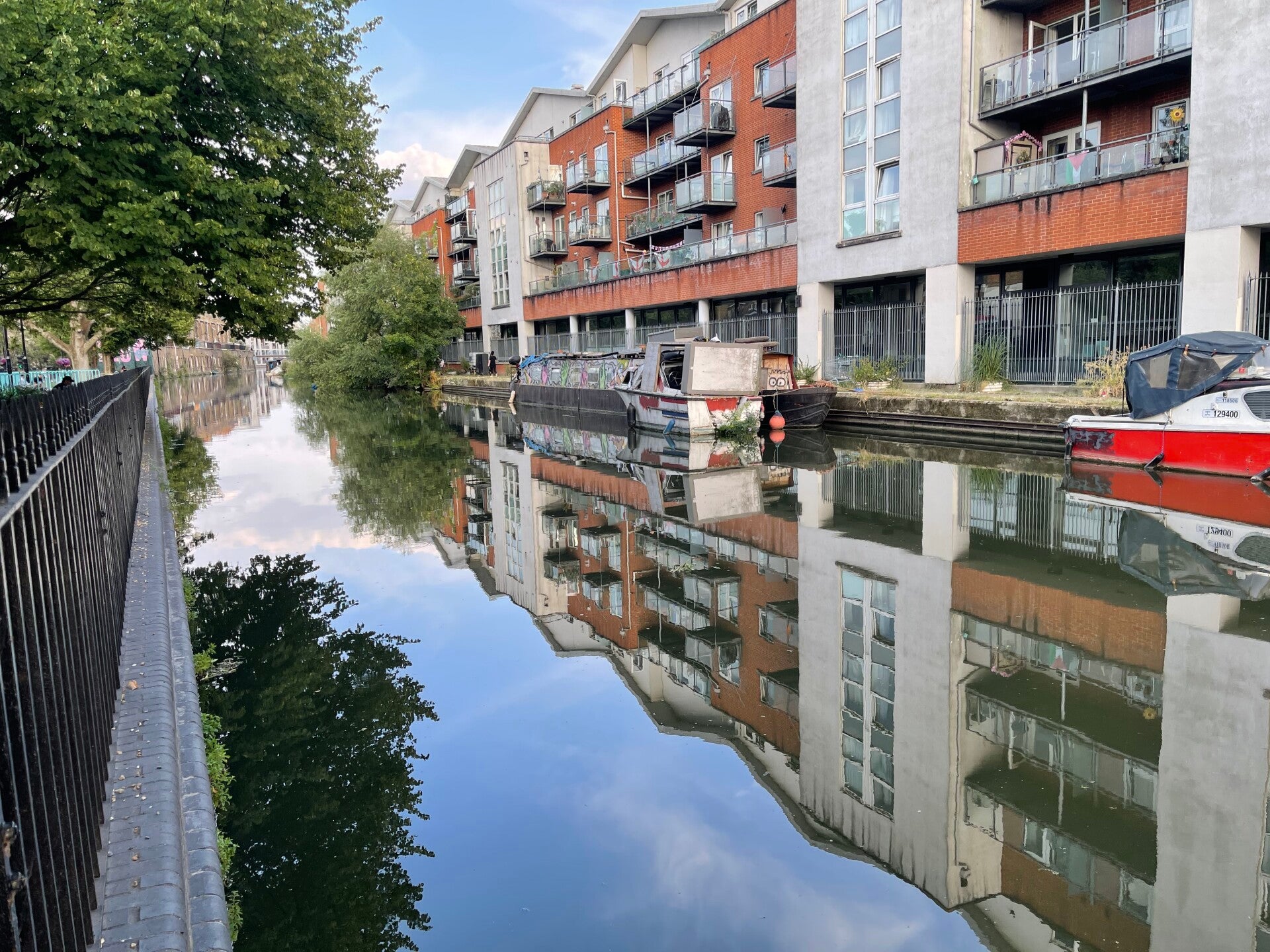
Such reflections usually indicate that the water surface is undisturbed, making it easier to spot any floating litter, oil sheens or other signs of pollution during routine inspections.
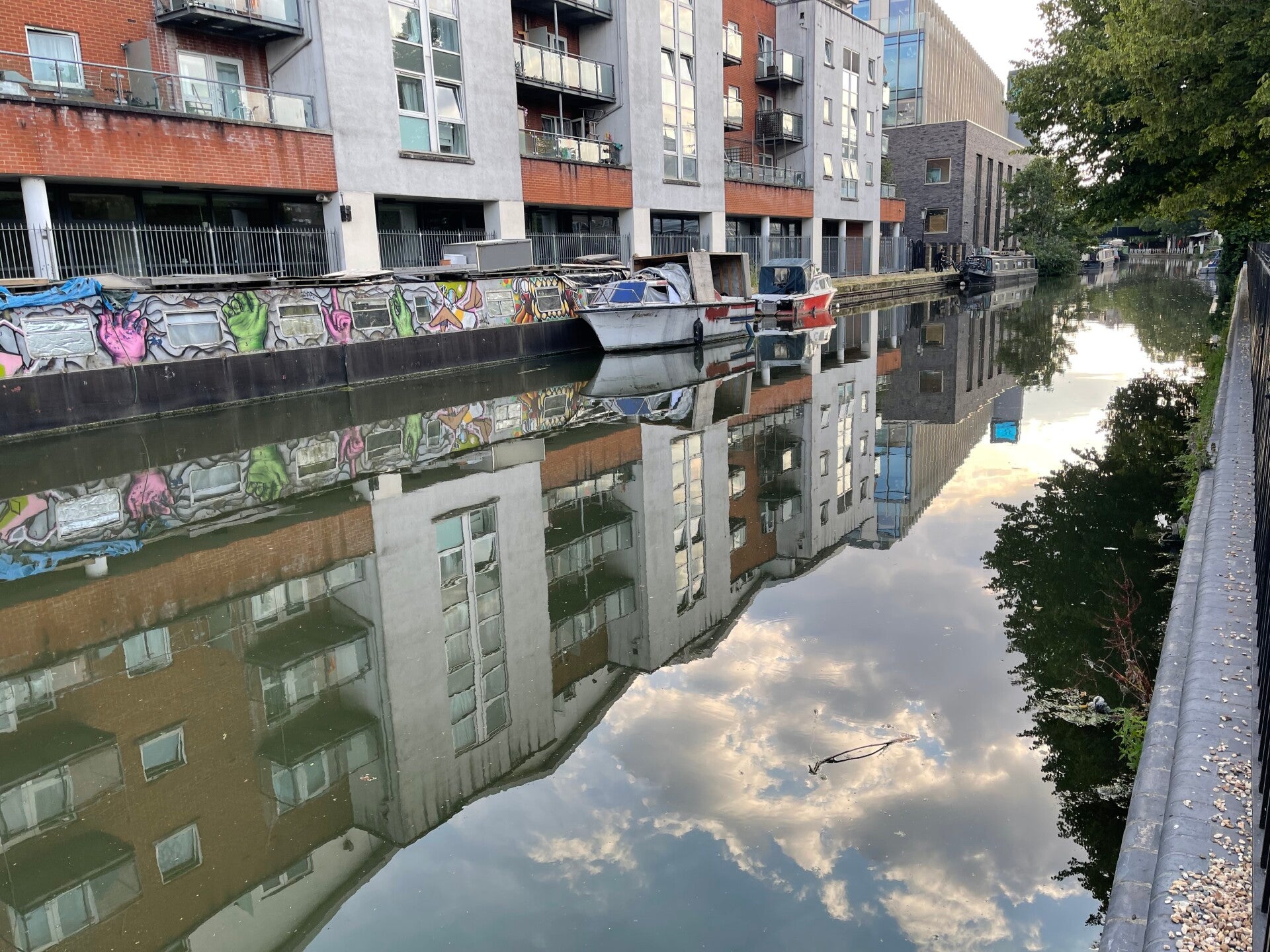
The tree-lined banks also play an important environmental role. Vegetation helps provide shade for the water, supports insects and birds, offers habitat for aquatic wildlife and softens what would otherwise be a heavily urban landscape.
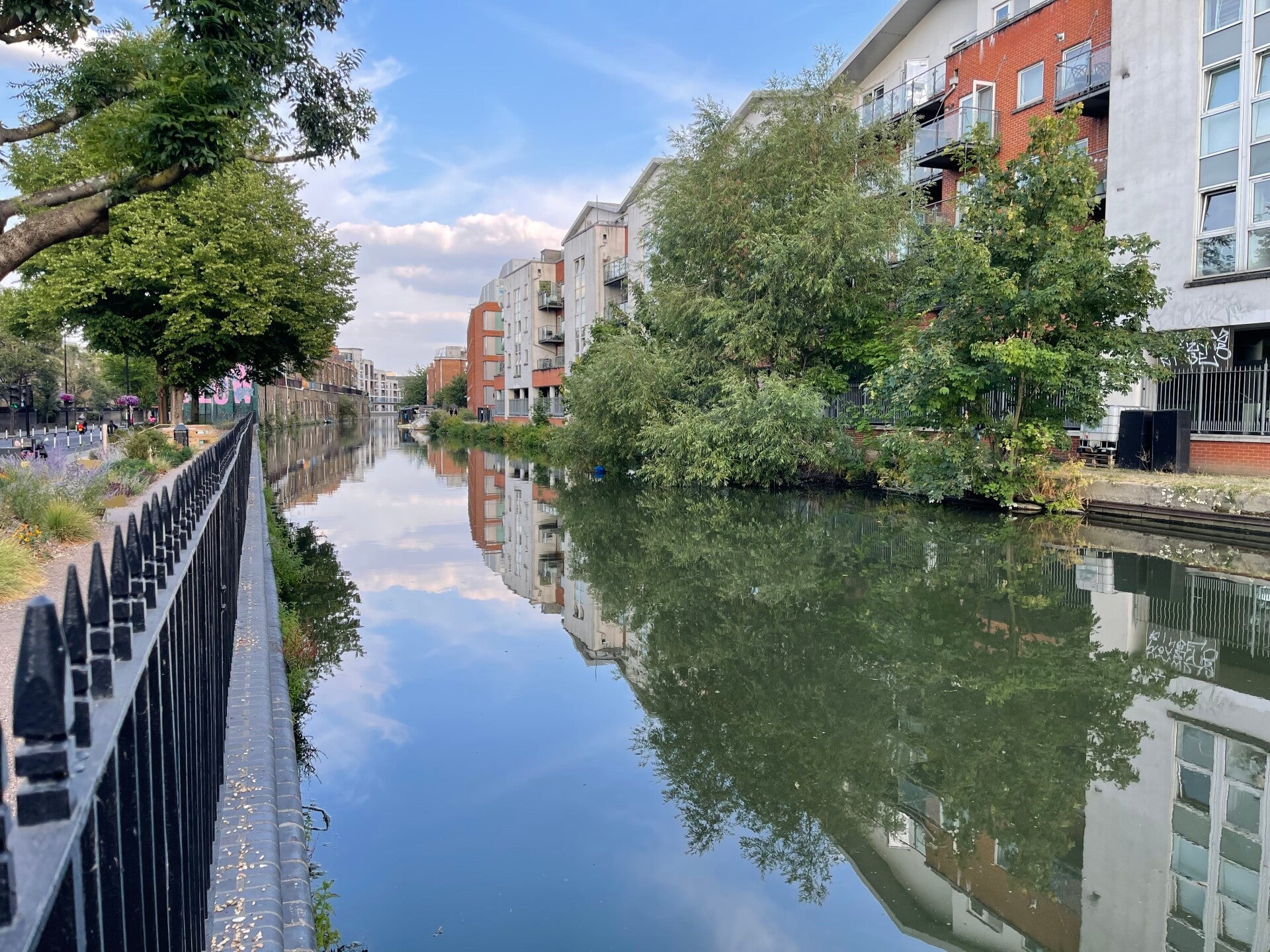
These views illustrate how the Grand Union Canal provides much more than a route for boats. Running through the heart of Queen's Park, it forms an important green corridor where mature trees, shrubs and waterside vegetation soften the surrounding urban landscape.
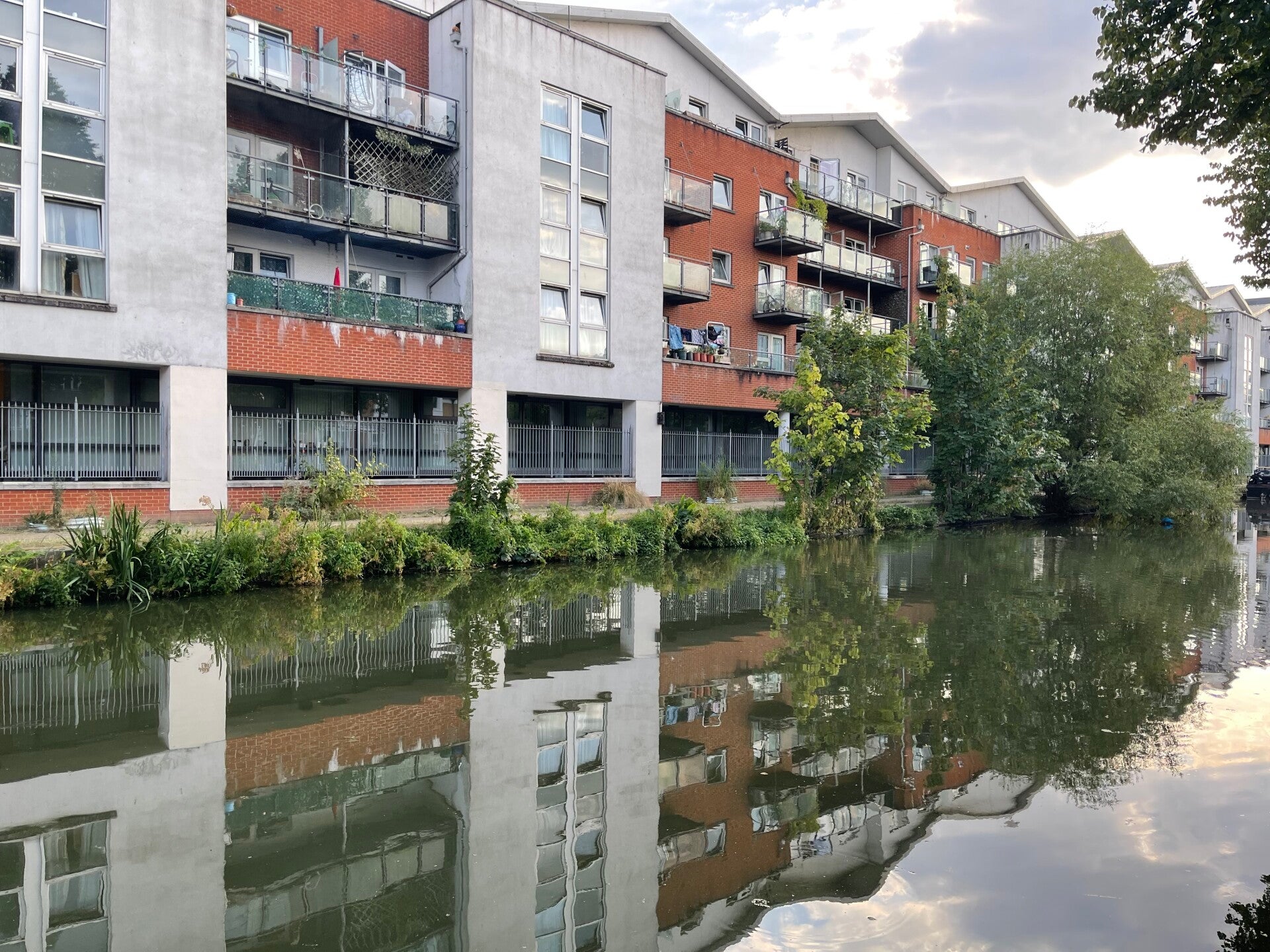
Despite the modern residential developments lining the banks, the canal remains an important habitat for wildlife. Trees provide shade that helps regulate water temperatures during the summer months, while overhanging vegetation offers shelter for fish, insects and birds. The planting along the water's edge also helps reduce bank erosion and improves the appearance of the canal.
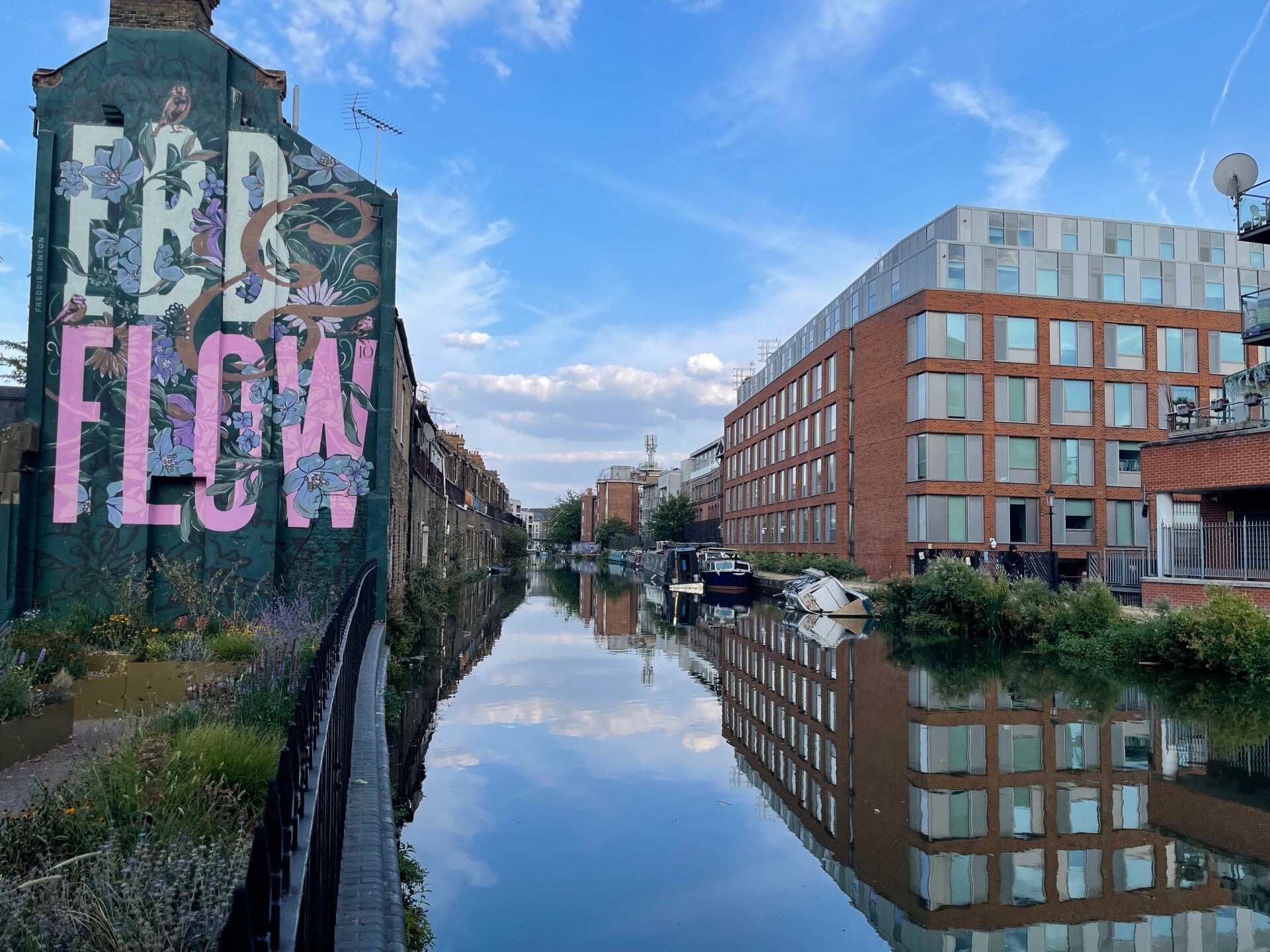
In the foreground left, the landscaped planting provides colour and habitat for pollinating insects while helping to soften the urban environment. Native grasses, flowering perennials and shrubs contribute to biodiversity and demonstrate how even small areas of planting can support wildlife along the canal corridor.
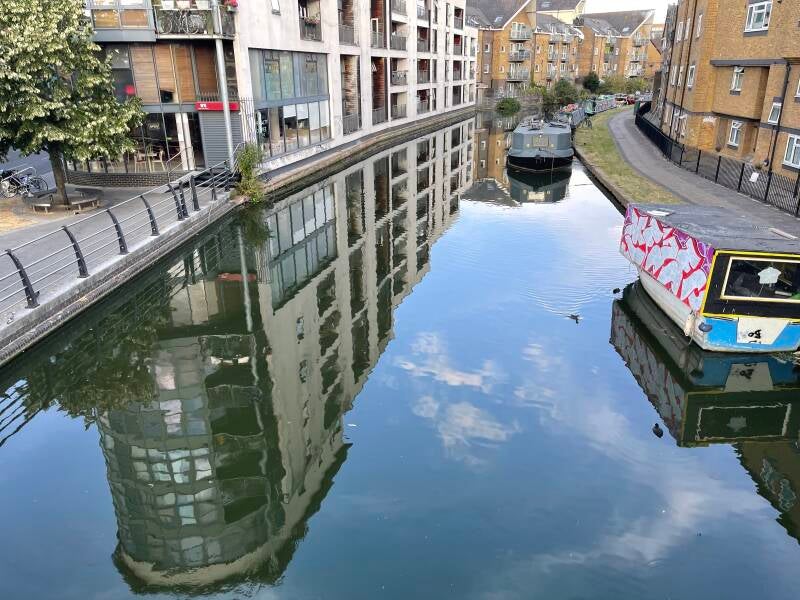
View from Ha'Penny Bridge looking East
Looking East: Ha'Penny Bridge looking east towards the modern waterside developments, where calm conditions provided excellent visibility for routine environmental monitoring.
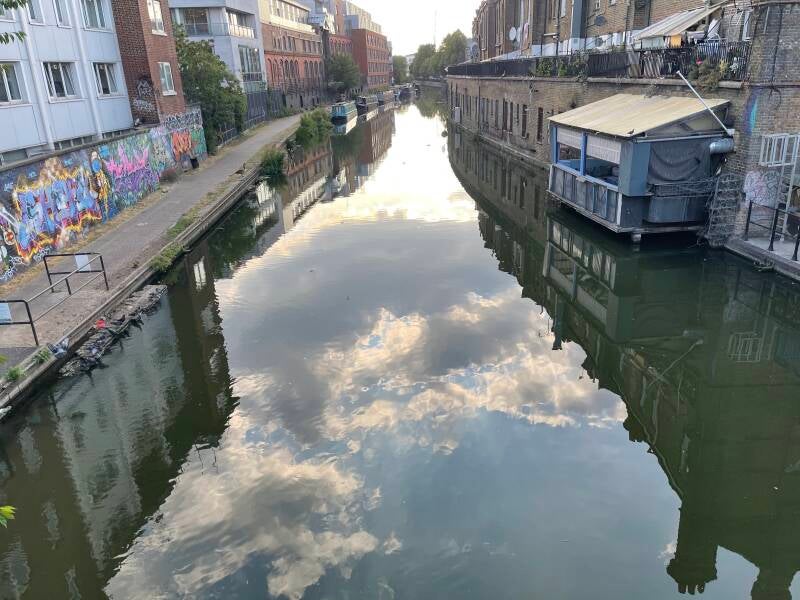
View from Ha'Penny Bridge looking West
Looking West: Looking west from Ha'Penny Bridge, historic canal buildings, public art and tranquil waters illustrate the Grand Union Canal's continuing importance as both a heritage asset and a thriving urban waterway.
On this occasion, no obvious signs of significant surface pollution. The waterway appeared generally clean, with little floating debris visible and no widespread evidence of contamination. While this is positive, visual inspections are only part of understanding the canal's health. Many pollutants—including nutrients, bacteria, dissolved chemicals and microplastics—remain invisible to the naked eye.