Paddington Arm, Grand Union Canal (Kensal Road Stretch)
Photos taken between 10:52am and 11:21am
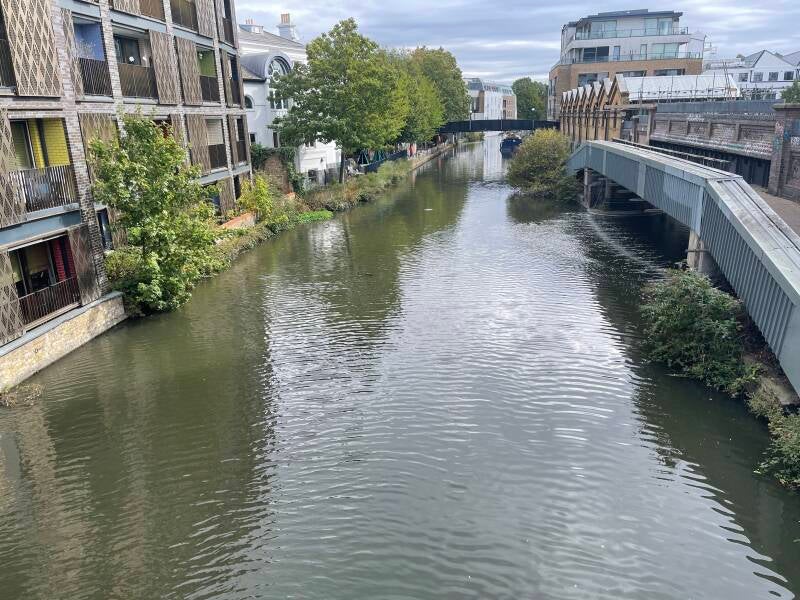
View from Ladbroke Grove Bridge looking East
The canal has a green-grey colour with moderate clarity, typical of an urban canal. Fine rippling covers much of the surface, suggesting light wind rather than disturbance or strong flow. There is very little obvious floating litter. The vegetation along the left bank is particularly noticeable. Despite the heavily built-up surroundings, shrubs and waterside plants create a continuous green margin softening the canal edge and potentially providing cover for birds and other wildlife.
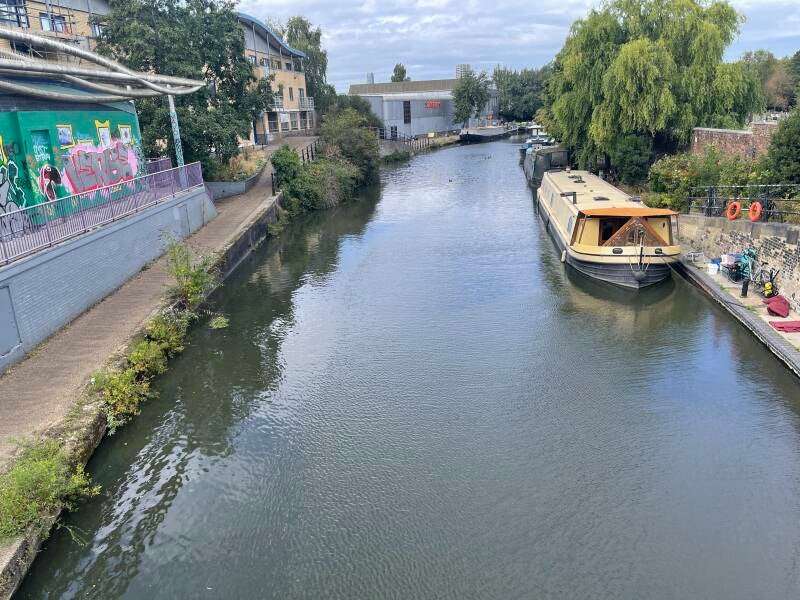
View from Ladbroke Grove Bridge looking West
The westward view appears particularly open and attractive. The water surface is again gently rippled and largely clear of visible litter or surface pollution. The large mature willow and other established vegetation provide a substantial green feature beside the canal.The moored boat and towpath activity show the canal's recreational and residential character, while the vegetation gives the scene a good balance between the urban environment and canalside habitat.
click to enlarge image
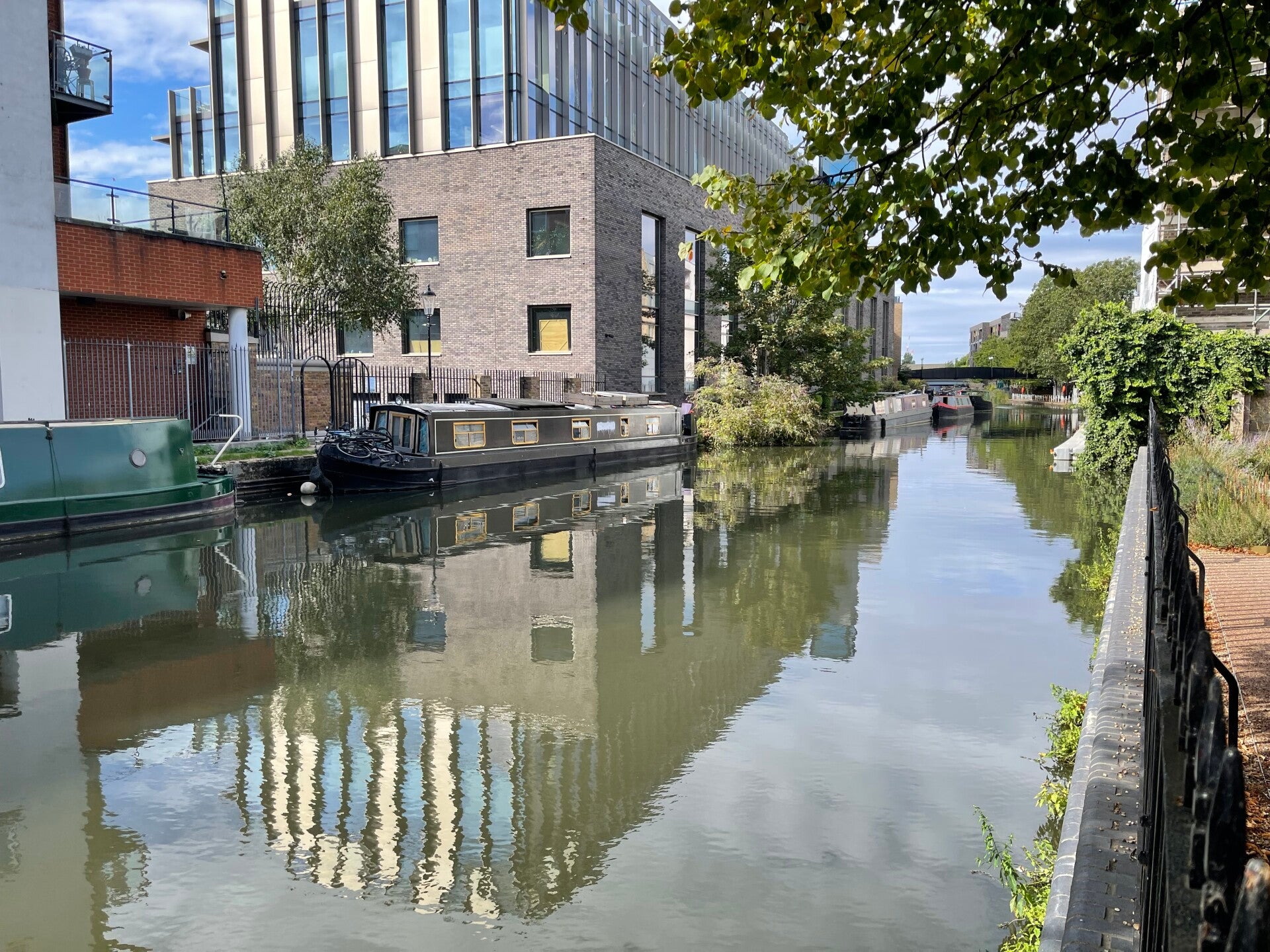
The water is a green-grey colour with moderate clarity. Conditions appear predominantly calm, especially in the first photograph where the still surface produces strong reflections of the buildings and moored boats.
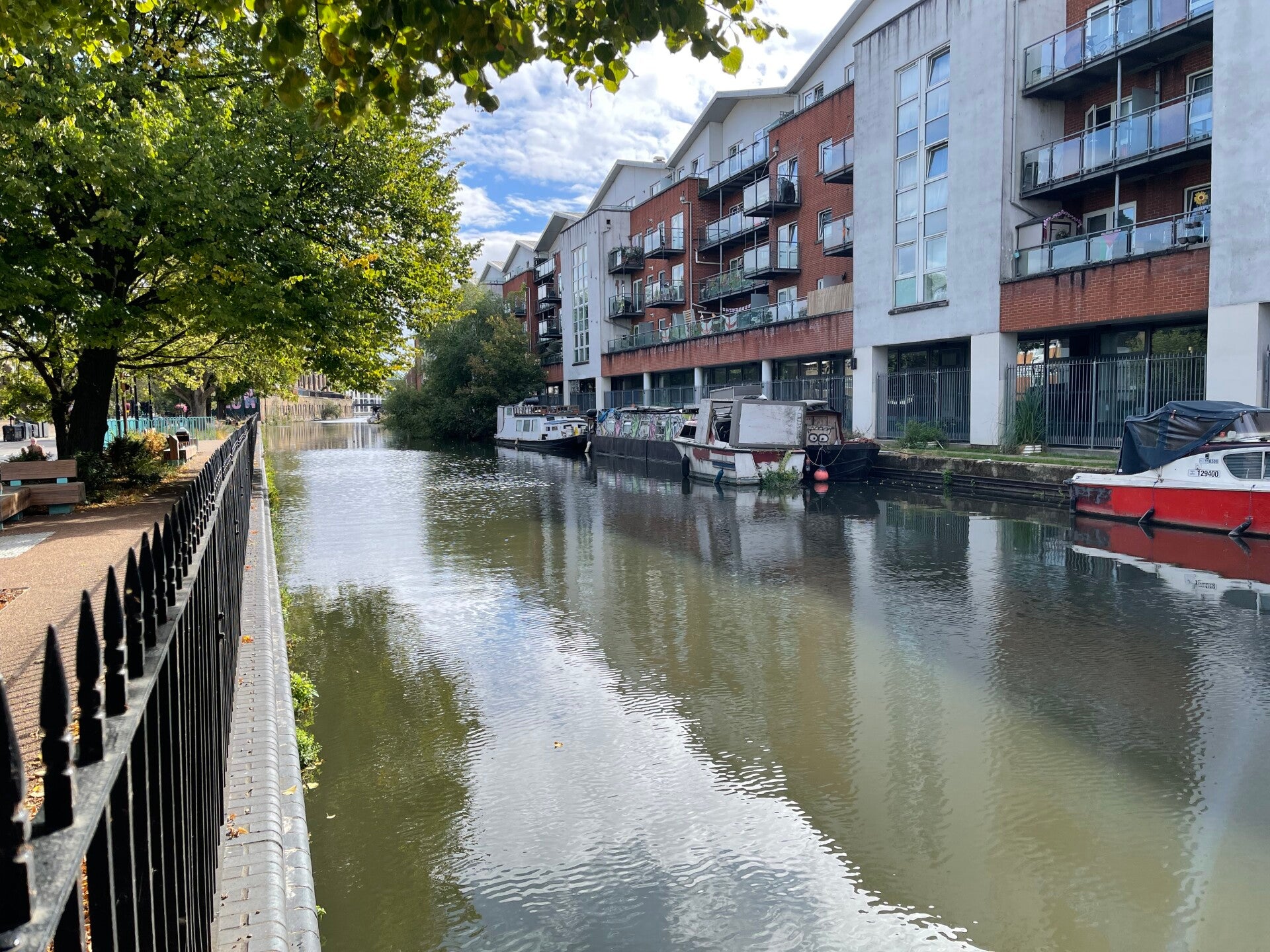
There is very little visible floating litter, and I there isn't any obvious oil sheen, persistent foam or other significant surface pollution. A few leaves and small pieces of natural material are present, which would be normal beneath the mature trees.
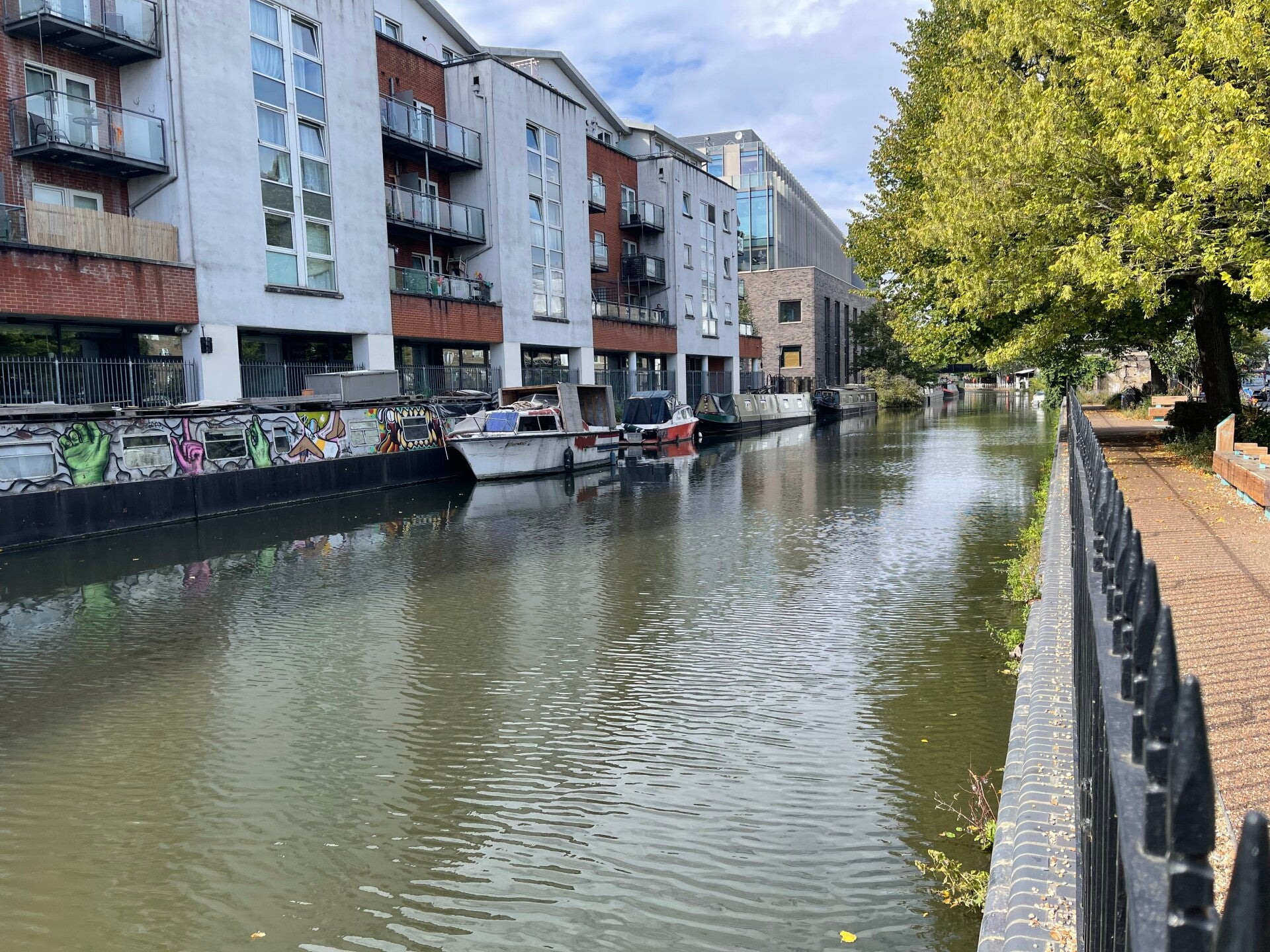
Although this is a highly urban environment—with apartments, offices, boats and hard retaining walls, the trees create a noticeably greener and more sheltered corridor.
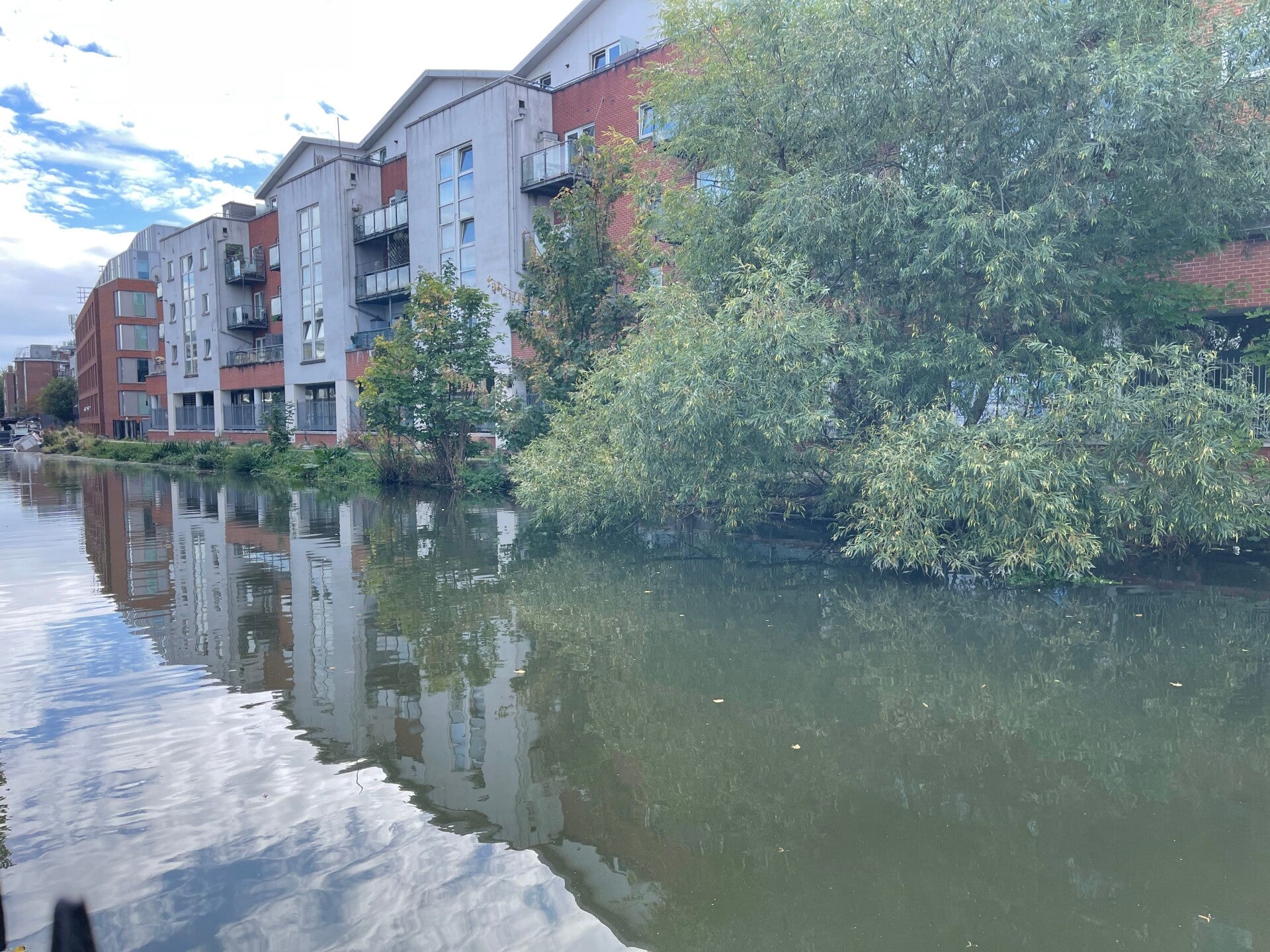
The large tree extending over the canal is particularly valuable visually and ecologically, creating a shaded, sheltered margin that could provide refuge for birds and other canal wildlife. Only a small amount of natural floating material is visible.
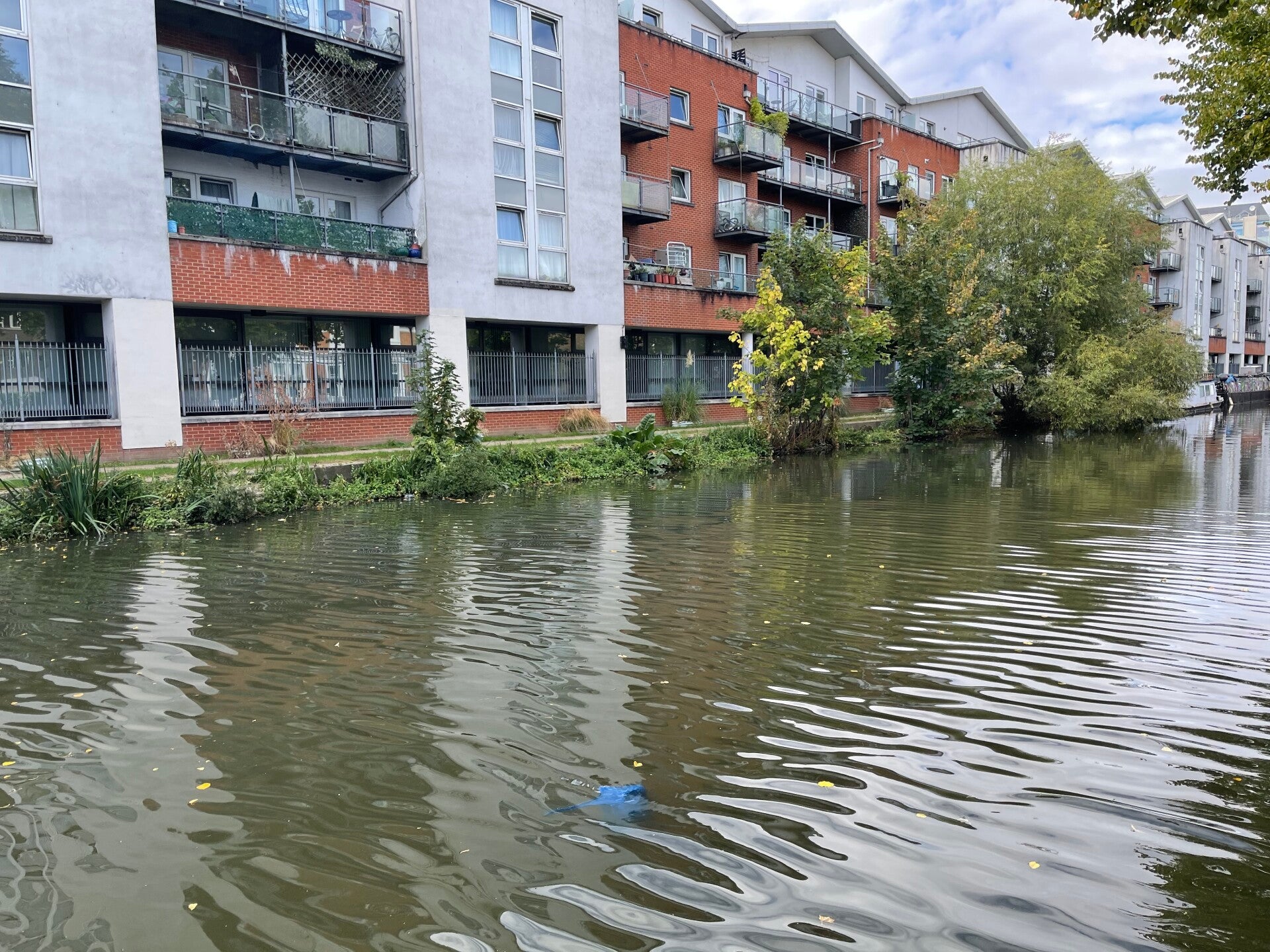
There is a good mixture of low waterside plants, shrubs and mature trees despite the heavily developed surroundings. The water has more pronounced rippling here, but there is no obvious oil sheen or foam and relatively little floating material.
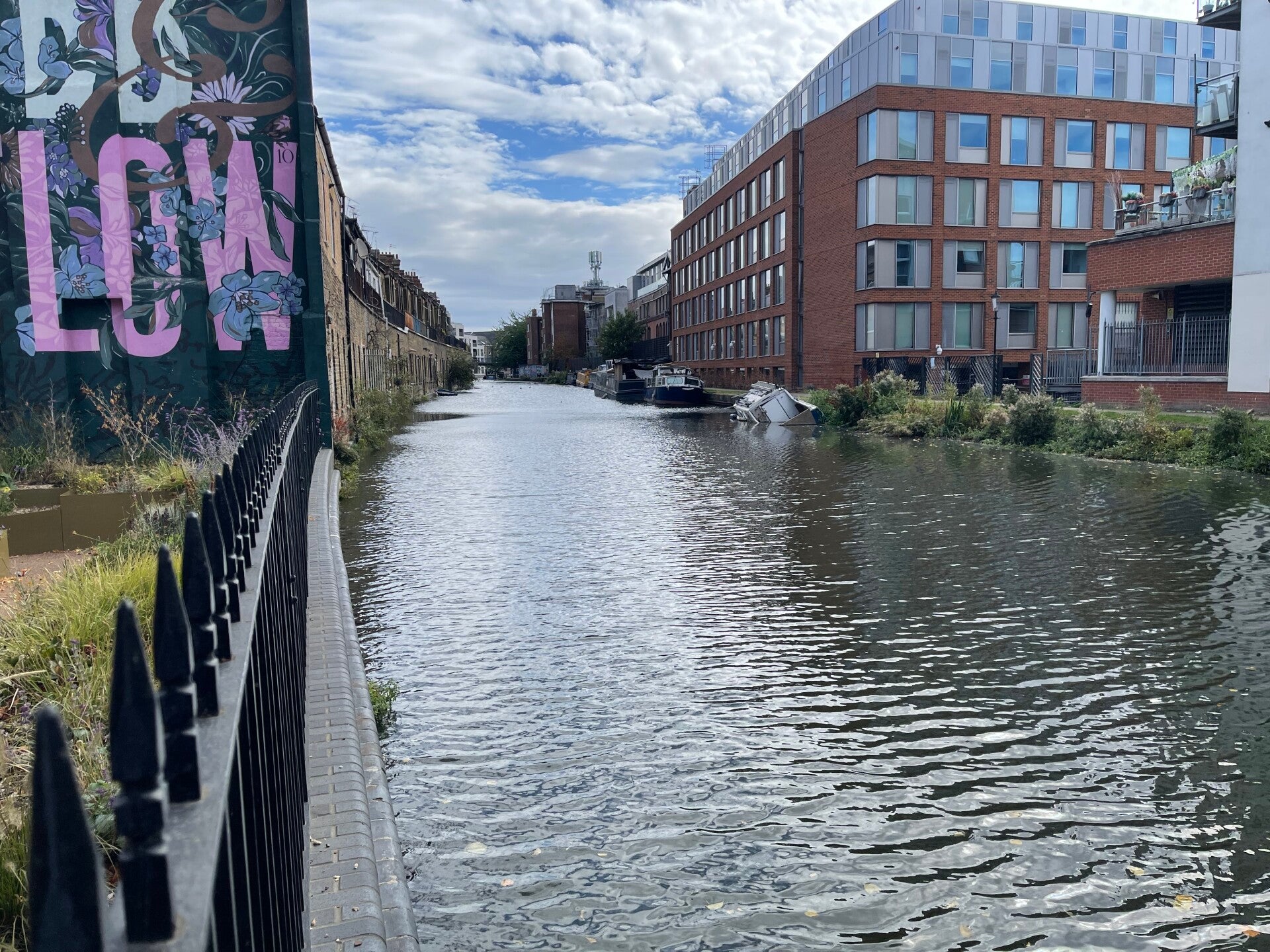
The canal has noticeably stronger rippling here, most likely caused by wind or recent boat movement. Despite this greater movement, the water surface appears largely free from floating litter. The vegetated margins are again an important feature. Grasses, flowering plants and other bankside vegetation soften what is otherwise quite a hard urban canal edge and provide additional habitat along the water.
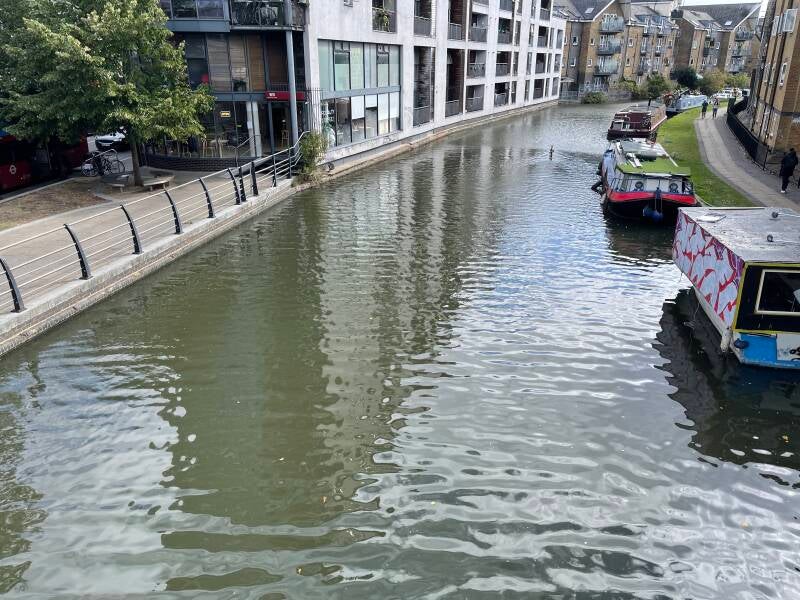
View from Ha'Penny Bridge looking East
There is relatively little floating material visible, apart from a few scattered leaves or small pieces of debris. The canal here has predominantly hard engineered edges, although the small grassed area and trees further along the towpath introduce some greenery. The moored boats also emphasise the canal's residential and recreational use.
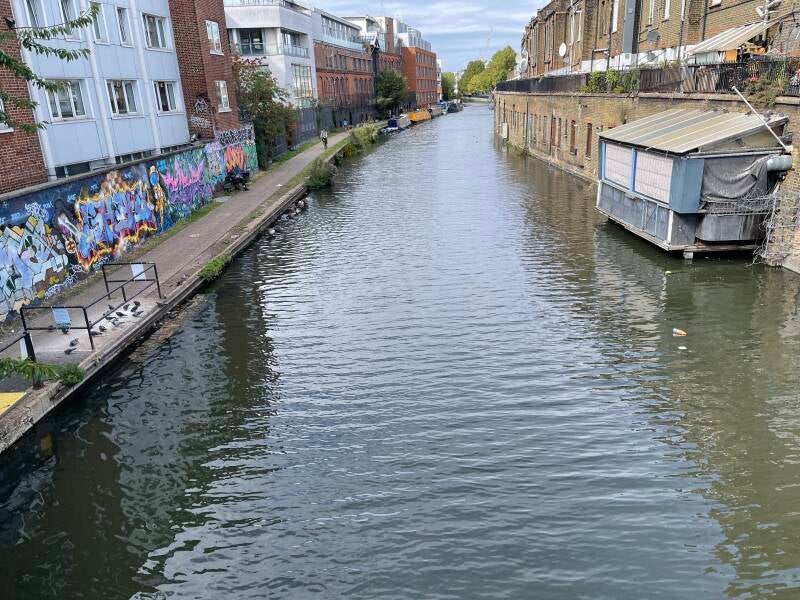
View from Ha'Penny Bridge looking West
The westward view has a particularly urban character, with the graffiti-covered wall, towpath, buildings and hard canal walls dominating the scene. Nevertheless, small patches of vegetation have established themselves along the water's edge and soften parts of the otherwise hard bank.
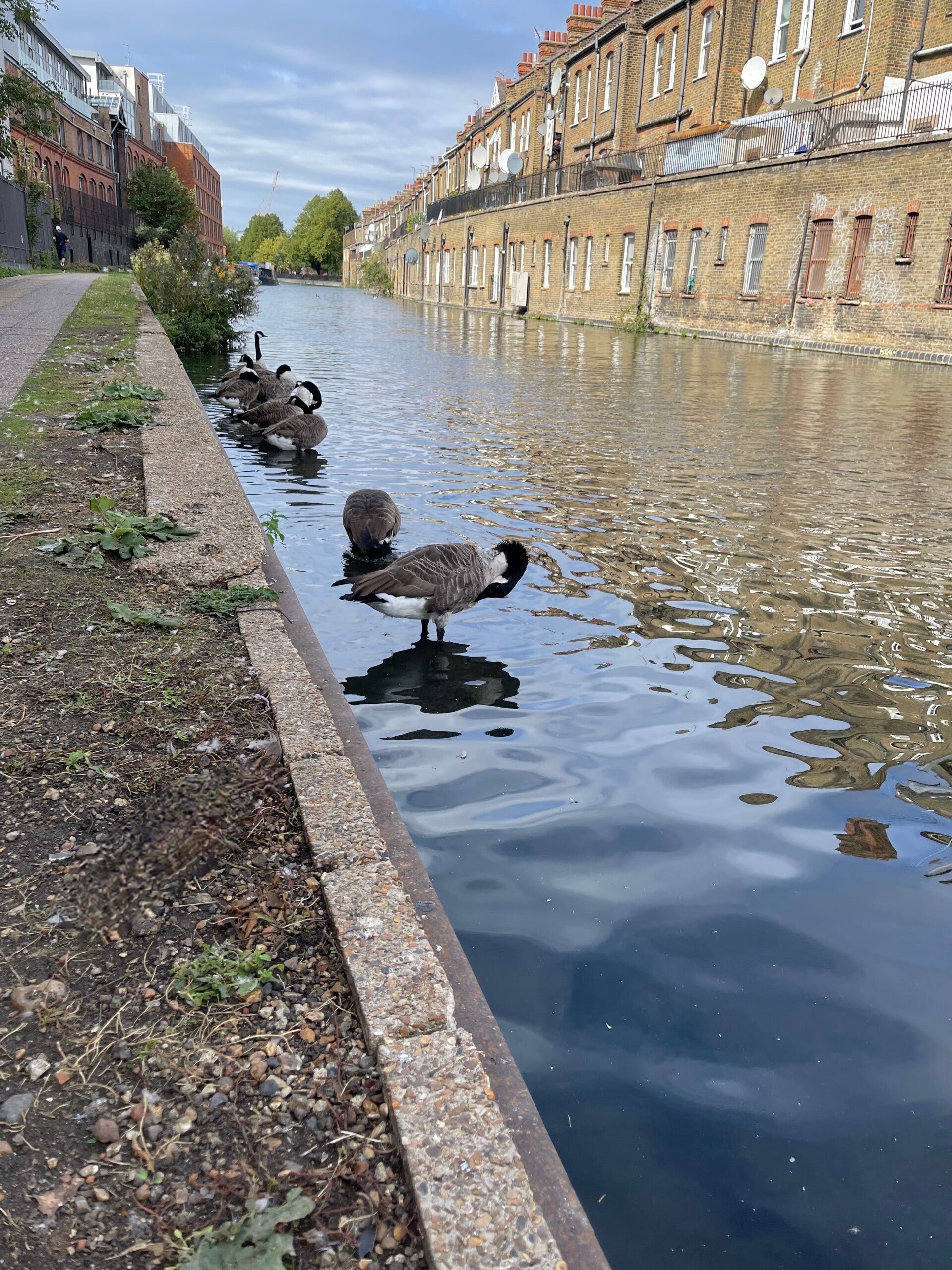
Wildlife was particularly noticeable around Ha’Penny Steps. Several Canada geese appear to be preening, suggesting that even this relatively hard-edged urban section provides a place where waterbirds feel comfortable stopping.
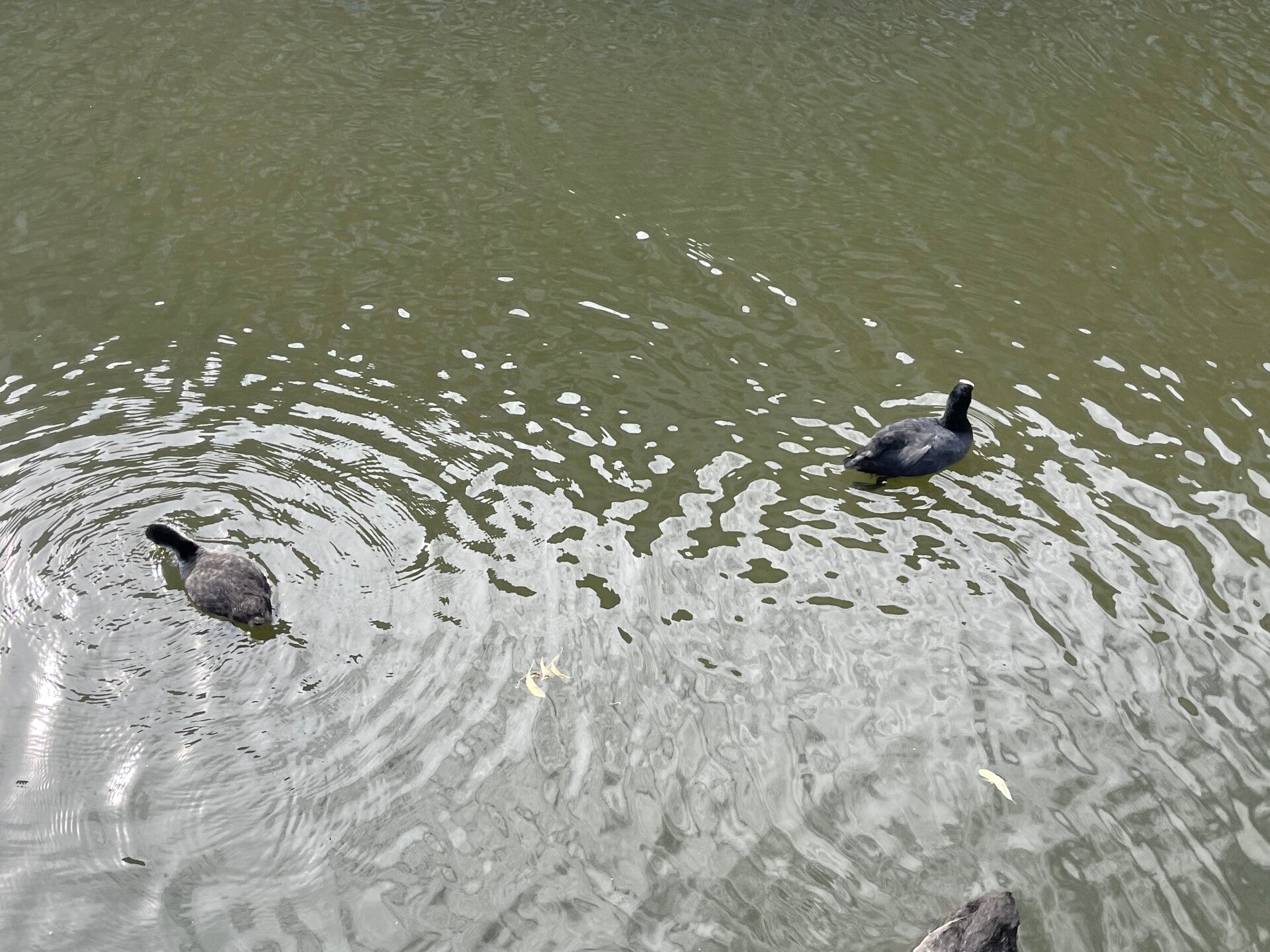
Eurasion coots actively using the open water. Together with the geese, their presence demonstrates that the canal is functioning as an urban wildlife corridor, even where natural bankside habitat is relatively limited.
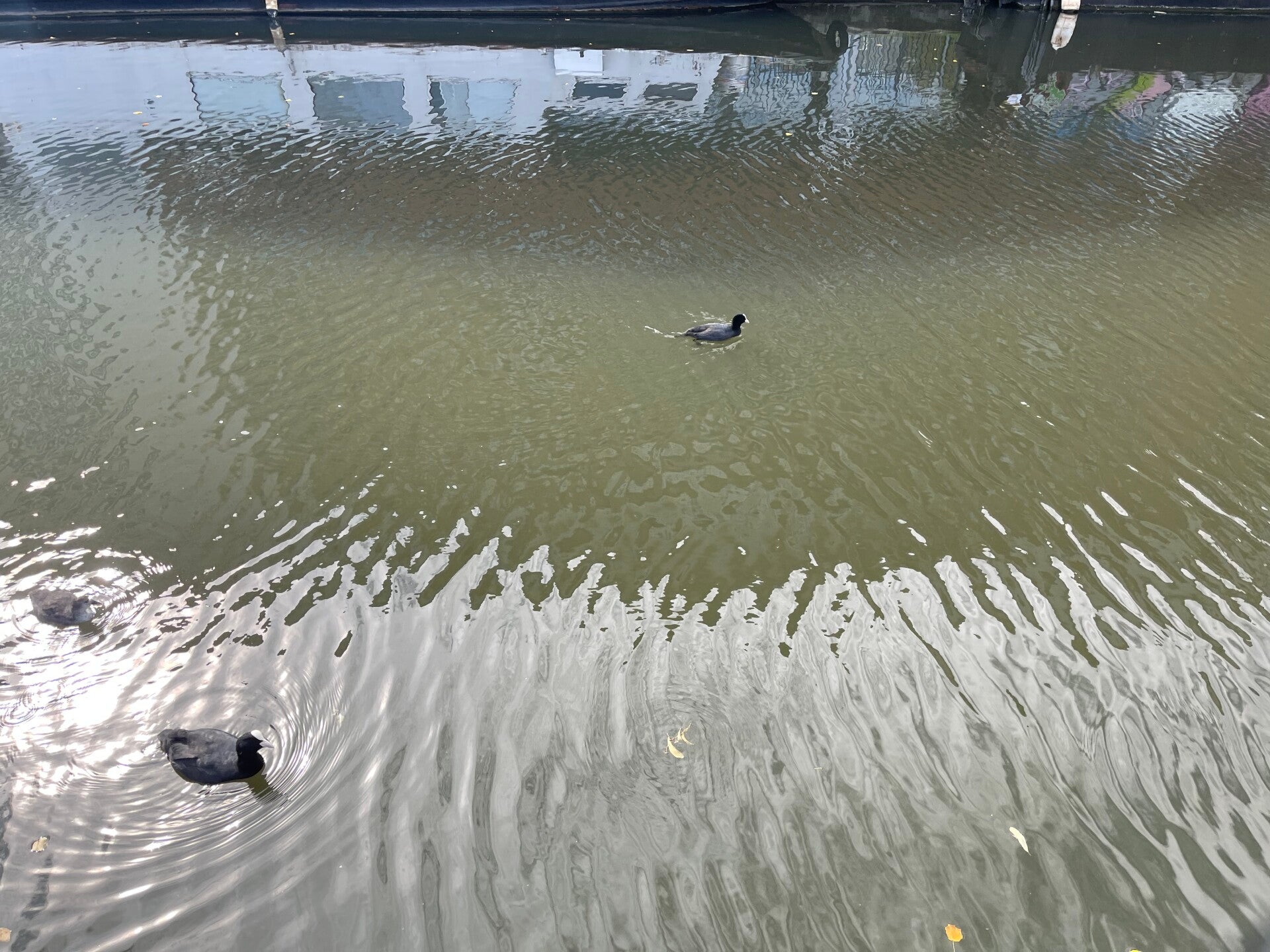
Their presence adds another dimension to this heavily urban stretch of the canal, demonstrating how even relatively engineered sections of the waterway can provide resting, feeding and movement opportunities for urban wildlife.
Overall Visual Assessment: Based solely on these visual observations...
| Indicator | Observation | Assessment |
|---|---|---|
| Water colour | Natural / expected | ● Excellent |
| Water clarity | Very clear | ● Excellent |
| Water movement | Natural / good movement | ● Excellent |
| Floating litter | Very little | ◆ Good |
| Surface pollution | None visible | ● Excellent |
| Wildlife activity | Several observations | ◆ Good |
| Oil / foam | None | ● Excellent |
| Bank vegetation | Healthy / abundant | ● Excellent |
Waterway appears to be in excellent visual condition, with little or no visible evidence of pollution or environmental deterioration.